Free inspections & quotesSame-day service availableSatisfaction guaranteed
Licensed & Insured
Family & Pet Friendly
Same-Day Service
Re-Treatment Guarantee
Trusted Locally
Licensed & Insured · UT #24592
Washington specifics
Wasp & Hornet Control in Washington, honestly
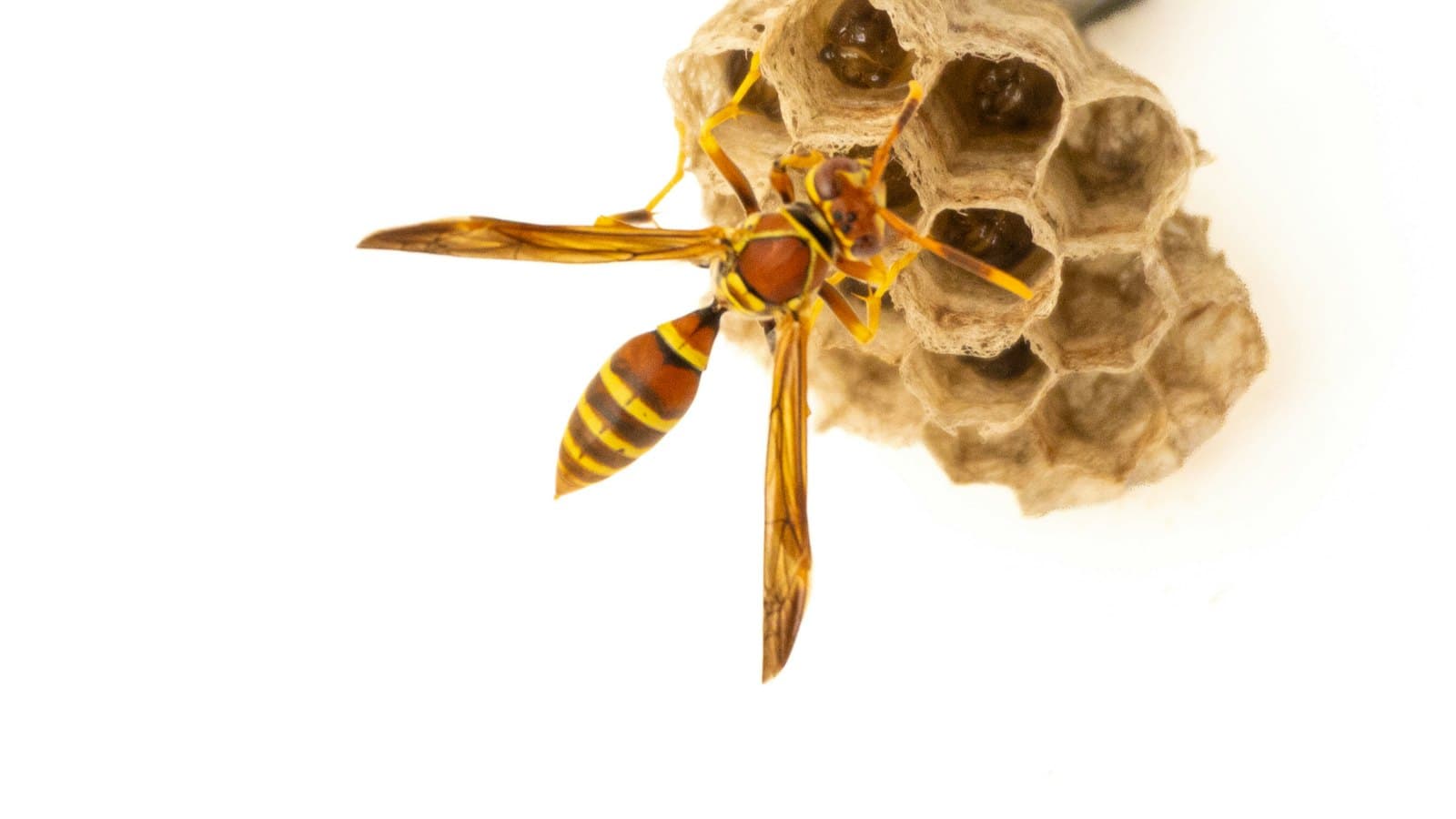
Wasp season in Washington starts earlier than most people expect. With mild winters, queens are out scouting by late winter or early spring, building small combs under eaves, inside the gaps of concrete roof tiles, behind light fixtures, and in block-wall caps. Those nests are tiny and easy to remove at first. By midsummer they're big, busy, and defensive, and nearly every call we get could have been a quick job a few months earlier.
The newer neighborhoods have a particular problem with paper wasps. Sienna Hills, Coral Canyon, and Green Springs are full of tile roofs, stucco soffits, patio covers, and pergolas, and each one offers sheltered framing for a nest. In Washington Fields, gardens, fruit trees, and livestock water draw yellowjackets and other wasps looking for food and water through the hot months.
Bees are a separate issue. Africanized honey bees have been found in Washington County, and you can't tell them from ordinary honey bees by looking. A swarm on a branch or bees moving in and out of a wall, meter box, or irrigation box should be left alone and handled by a professional. We remove wasp nests with the right protection, treat the places they like to rebuild, and handle bee situations carefully.
Where wasp & hornet control matters most in Washington
Washington isn't one pest problem, and it isn't one treatment either. These are the parts of the city where this service does the most work, and why.
Sienna Hills & Coral Canyon
84780
Tile roofs, stucco eaves, and patio covers on newer homes. Paper wasps build in the hollows under roof tiles and in eave corners, usually on the sunny side. Treating those favorite spots in spring prevents most of the summer's nests.
Washington Fields
84780
Gardens, orchards, livestock troughs, and outbuildings. Wasps and yellowjackets come for water and fallen fruit, and sheds and barns give them sheltered nesting spots. Ground nests in pastures and ditch banks are the hard ones to see.
Green Springs
84780
Patios, golf-course greenery, and plenty of irrigated landscaping. Wasps nest in eaves, under deck rails, and in shrubs, and patio dining and trash cans keep them coming through late summer.
Old town
84780
Older homes with gaps in soffits, vents, and wall voids. Yellowjackets and bees can build inside the walls, which is harder to find and riskier to handle. Steady traffic in and out of one spot on the wall is the sign to call.
When wasp & hornet control actually gets done here
Desert pest pressure is seasonal and it's predictable. Knowing which window you're in is most of knowing what to book.
Queens buildingFebruary – April
Mild winters mean queens start early here. Nests are small, with few or no workers, and quick to remove. This is the cheapest and easiest time of year to deal with wasps.
Nests growingMay – June
Workers are out and nests are getting larger fast. Still manageable, and worth handling before patio season, when you actually want to be outside in the evenings.
Full size & defensiveJuly – September
Full-size nests, the most workers, and the most defensive behavior. Wasps are also hunting water hard in the heat, so pools, fountains, and drip lines draw them in. Most of our nest calls come in now.
If the pests come back, so do we.
Free re-treats between scheduled visits, no questions, no extra invoice. That’s the Butter Promise.
In a southern Utah summer, wasps go wherever they can find water, food, and shade, and your house often has all three. Here's what pulls them in and when it points to a nest.
There's a nest under my eave. Can you come out today?
Usually, yes. Washington is about ten minutes from our St. George office, and when you call before noon we aim for same-day service. Until we get there, keep kids and pets away from the area and don't try to spray or knock the nest down yourself, especially in late summer when a disturbed nest can send a lot of wasps out at once.
There's a swarm of bees in our tree. What should we do?
Leave it alone and keep people and pets back. Africanized honey bees have been found in Washington County, and they look the same as regular honey bees. A swarm that's just resting on a branch may move on in a day or two, but if bees are going into a wall, meter box, irrigation box, or other cavity, they're setting up a colony. Call us and we'll assess it and handle it safely.
Why do wasps keep building in my roof tiles?
Concrete and clay roof tiles leave open, shaded hollows at the edges that make perfect sheltered nesting spots, and the same spots tend to get chosen year after year. We remove the nests and treat those openings, especially on the sunny sides of the roof, before queens start looking in early spring.
What about a nest inside a wall?
That needs to be done carefully. Sealing the hole while the colony is still inside is the usual mistake, because wasps or bees will chew their way into the living space instead of leaving. We treat through the entry point, wait until the activity stops, and then seal it. For bees we also look at whether comb needs to come out so it doesn't attract new swarms or melt in the summer heat.
How much does wasp & hornet control cost in Washington?
Nest removal is usually a single visit, priced on how many nests there are and how hard they are to reach. Nests on the property are also covered under our recurring plans, which is why plan customers rarely have to think about wasp season. Either way you get the number before any work starts, and there's no trip charge for Washington: we're based in St. George, so it's a routine stop on our route rather than a special trip.
What does a wasp & hornet control visit in Washington cover?
Every visit covers: finding nests, including hidden and ground nests; safe treatment and removal with proper protective gear; knockdown of reachable nests; preventive eave treatment to stop rebuilding. What changes by address is the weighting. Sienna Hills & Coral Canyon and Washington Fields are two different jobs, so the technician decides on site where the time is best spent rather than running the same checklist everywhere.
Free Estimate
Ready to see why everything is better with butter?
Tell us what’s bugging you and we’ll get back to you fast with a free quote, usually the same day.