
Summer changes how wasps act around a house. Long, hot days keep colonies building and workers moving around patios, rooflines, gardens, trash bins, block walls, and sheds. A wasp or two drifting through the yard may not seem like much, but steady traffic usually means the property is supplying food, water, shade, or a sheltered place to nest.
In St. George, wasps are seldom the only pest picking up. Spiders, scorpions, ants, rats, mice, mosquitoes, cockroaches, and weeds all become more noticeable as the heat builds. Good wasp control begins with figuring out what is drawing them in, then deciding whether you're seeing harmless foraging or traffic tied to an active nest.
Heat Fuels Fast Colony Growth
Wasps get busier as temperatures rise because a growing colony needs food, shelter, and building material. In spring, queens search for protected spots to start a nest. As the colony expands, workers fan out to whatever food is nearby.
- Eaves, soffits, patio covers, and the gaps under tile roofs shield nests from sun and wind.
- Block walls, sheds, deck undersides, and stucco gaps offer quiet places to build.
- Shrubs, palms, and dense plantings hide activity from view.
- Garages and storage rooms attract wasps when doors stay open for long stretches.
A small nest can turn into a real summer problem when it's close to a door, walkway, or seating area. An inspection shows whether the activity is a few passing wasps or part of a growing colony.
Backyard Food Pulls Them Closer
What wasps want to eat changes through the season. Early on, they hunt insects to feed their larvae. Later in summer, they turn toward sugar: ripe fruit, spilled soda, trash, and food left out. That shift is why a patio can go from fine to unbearable in a matter of weeks.
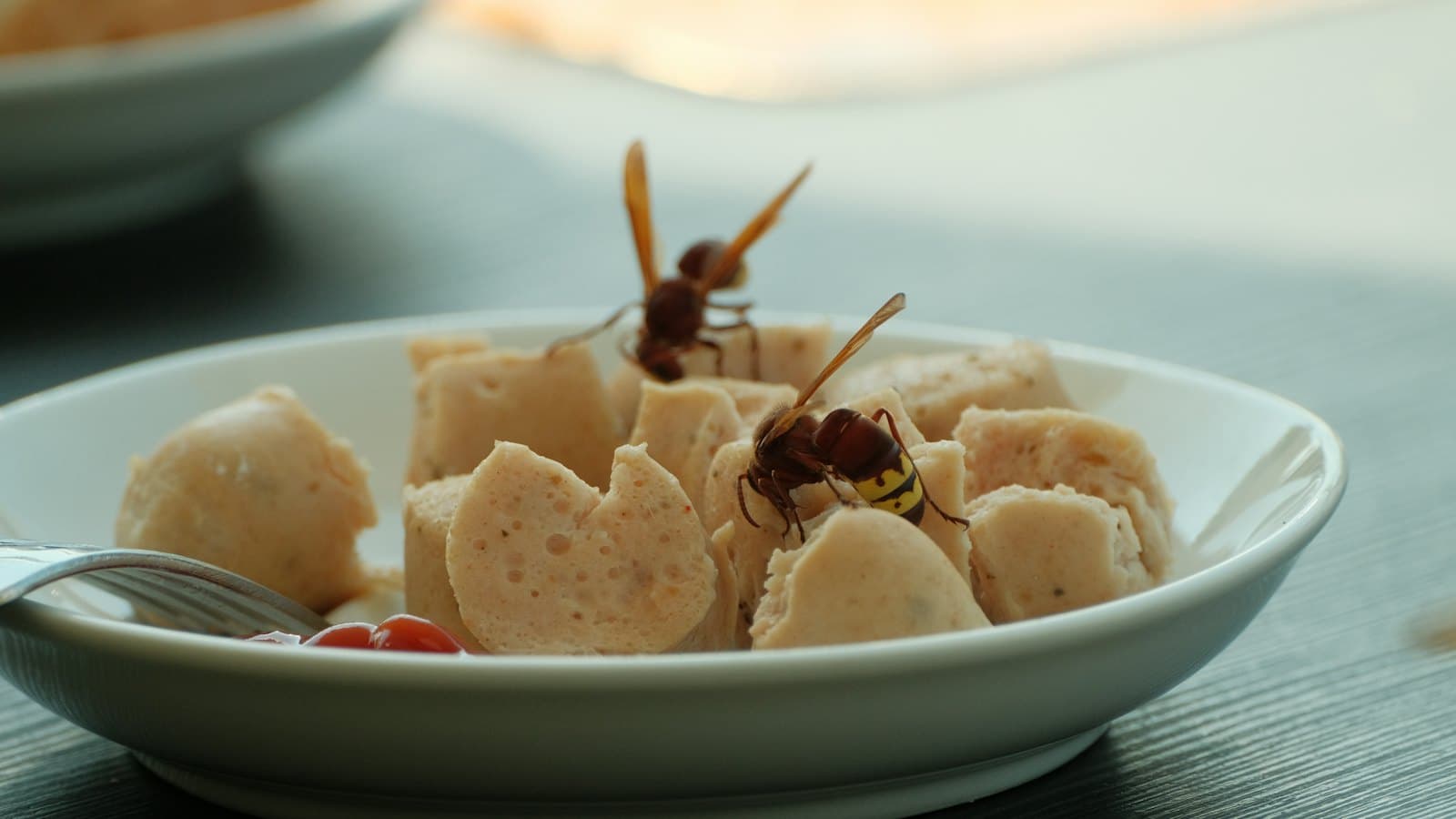
Grills, open trash cans, compost, fallen fruit, pet food, and sticky drink spills all bring wasps toward people. If other insects are thriving in the yard, wasps will also come to hunt. Spiders, ants, mosquitoes, cockroaches, and other pests are often a sign of a bigger outdoor food chain.
That's where year-round pest care helps. Wasp pressure usually starts before the nest is easy to spot, and regular monitoring picks up changes before they become harder to handle.
Water And Shade Matter Most In The Desert
In southern Utah heat, water is what wasps want most. Any dependable source can make one yard far more attractive than the one next door. They visit drip emitters, misters, birdbaths, pool edges, pet bowls, fountains, wet soil, and shaded beds where insects gather.
- Leaky drip lines and sprinkler overspray leave damp spots that support insects.
- Dense shrubs give wasps shade, cover, and hidden flight paths.
- Pools, fountains, and birdbaths draw steady traffic on hot afternoons.
- Overgrown weeds shelter the insects wasps hunt.
Landscaping makes a yard feel cooler, but thick, wet, or untended plantings also give pests protected space. A professional can tell normal wasp traffic apart from conditions that keep bringing them back.
Seasonal Shifts Change Where Wasps Go
Wasp behavior is tied to everything else happening outside. Heat, dry stretches, monsoon storms, irrigation, plant growth, and insect populations all change where pests collect. As those conditions shift, wasps move closer to the house in search of food, water, and shade.
During summer, wasps are most noticeable near outdoor kitchens, patios, garden edges, and doorways because those spots offer food along with sheltered flight paths.
Wasps are more than an annoyance. A nest near a busy area can turn defensive when it's disturbed by everyday life. People walking past, kids playing, dogs nosing around, or a door that opens all day can all raise the chances of getting stung.
Hidden Nests Call For Careful Handling
The most worrying wasp activity is the kind that keeps happening in the same spot. A few wasps crossing the yard are likely foraging, but constant traffic at a gap, shrub, roof tile, or fence post often means a nest is there. Hidden nests are tricky because you may only see the entrance, not the size of what's behind it. If you see a large swarm or very aggressive insects, keep your distance, since Africanized honey bees have been found in Washington County and should be handled by a professional.
- Watch for wasps flying in and out of the same small opening.
- Notice traffic near soffits, roof tiles, vents, sheds, deck undersides, or thick plants.
- Treat buzzing inside a wall or covered area as a reason to schedule an inspection.
- Leave nests alone when they're near doors, patios, play areas, or pet runs.
Professional wasp control matters because the nest's location, height, species, and activity level all affect the safest approach. A targeted plan can also address related problems such as spiders, scorpions, ants, rodents, mosquitoes, cockroaches, and weedy cover. With the source handled properly, outdoor areas become safer and more usable all summer.
Dealing with this pest at your place?
Butter serves St. George and southern Utah with free inspections and a re-treatment guarantee. Get an honest quote, no pressure.
Aspen Chournos
Aspen Chournos writes about desert pest pressure and prevention for homes and businesses across St. George and southern Utah.