"Wasp" covers a huge range of insects. Most are harmless, and quite a few are genuinely useful. Around St. George, a homeowner is likely to meet five or six kinds, and they are different enough that lumping them together leads to bad decisions both ways: panicking over something harmless, or shrugging off something that deserves respect.
Social vs. Solitary
This is the most useful split.
Social wasps live in colonies with a queen and workers, share a nest, and defend it as a group. Nearly every stinging incident comes from this group. Paper wasps, yellowjackets, and hornets are all social.
Solitary wasps live alone. Each female builds and stocks her own nest, has no colony to protect, and usually stings only if she is grabbed or pinned. Mud daubers, tarantula hawks, and most parasitic wasps are solitary.
Figure out which group you are looking at and you have answered most of the practical question.
Paper Wasps
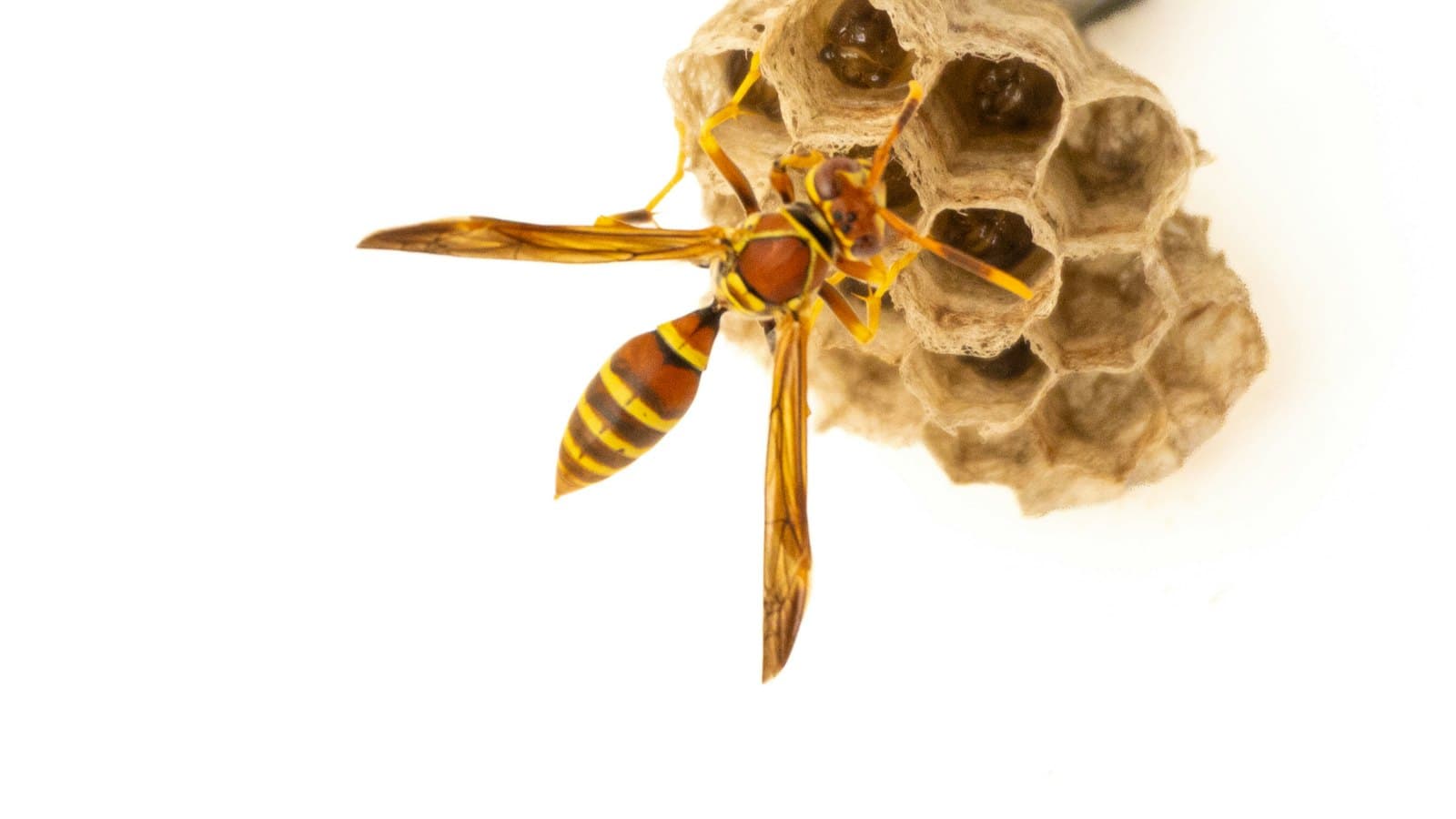
Slender and long-legged, usually brown, reddish, or yellow-and-black, around an inch long. Their legs dangle noticeably in flight, which is a handy way to recognize them.
They build open, umbrella-shaped combs with exposed cells under eaves, inside patio covers, on tile roof edges, in door frames, and inside anything sheltered and left alone. Colonies stay fairly small.
Paper wasps are the most common nesting wasp on St. George homes and, among the social wasps, the easiest to live near. They defend a small area and generally ignore nearby activity. They also eat a lot of caterpillars.
Handling: A small, reachable nest early in the season is manageable. A nest over a doorway, on a patio cover, or on a play set should come down regardless of size.
Yellowjackets
Short, stocky, and sharply banded in bright yellow and black, about half an inch long. They hold their legs tight to the body when they fly.
They nest in enclosed spaces: in the ground, often in old rodent burrows, inside walls and block walls, in attics, under sheds, and in thick shrubs. Colonies grow to hundreds or thousands.
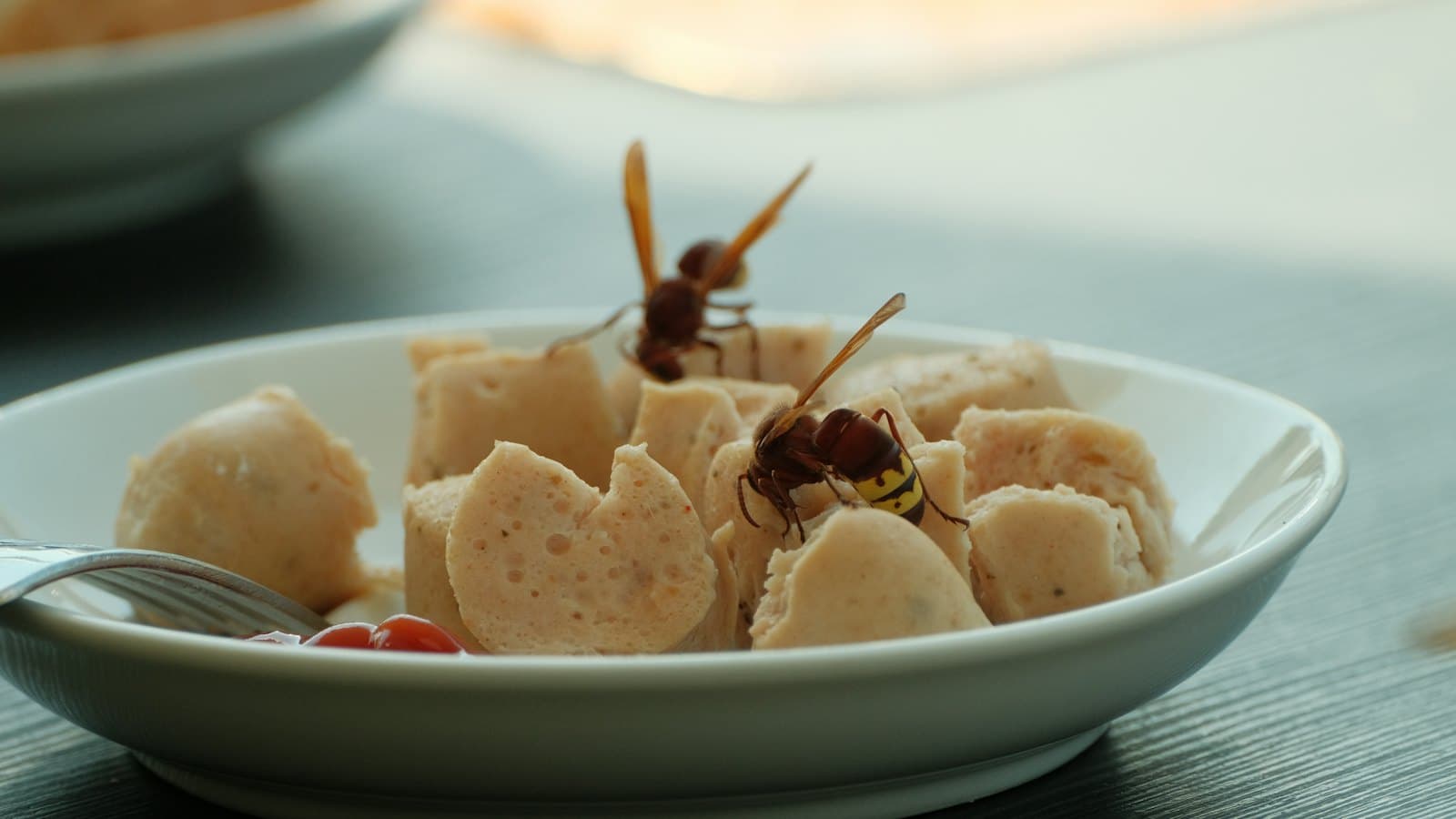
This is the group that causes trouble. They are highly defensive, react to vibration, sting repeatedly, and scavenge both meat and sugar, which is why they show up at backyard cookouts and around trash cans late in the season.
Handling: Always a job for a professional. Ground nests especially should never be approached, because the response is instant and there is no safe distance to work from with a store-bought spray.
Hornets
True hornets, such as the European hornet, are not established in Utah. The bald-faced hornet, a black-and-white wasp that is technically a type of yellowjacket, does live in the state but is uncommon in the hot, low desert around St. George.
When present, bald-faced hornets build large, gray, enclosed paper nests hanging from branches or eaves, with colonies of several hundred. They defend a wide area and will chase.
Handling: Always a job for a professional, at any size. Most "hornets" reported around St. George turn out to be paper wasps or yellowjackets, so getting a positive identification first is worthwhile.
Mud Daubers
Very slim with a thread-thin waist, often shiny black or metallic blue. They build small mud tubes on sheltered walls, in garages, and under eaves.
Solitary, calm, and beneficial. They stock their nests with paralyzed spiders, including black widows, which are common in Washington County. They almost never sting.
Handling: Leave them be. If the mud nests bother you, scrape off old ones in winter.
Tarantula Hawks And Other Large Solitary Wasps
Southern Utah is home to tarantula hawks, large wasps with a dark blue-black body and bright orange wings. They hunt tarantulas and are usually seen visiting flowers in summer. Their sting is famously painful, but they are not aggressive and almost never sting unless handled.
Cicada killers and other big solitary wasps can also show up. They look intimidating and are generally harmless.
Handling: No action needed. Give them space and they will ignore you.
Parasitic Wasps
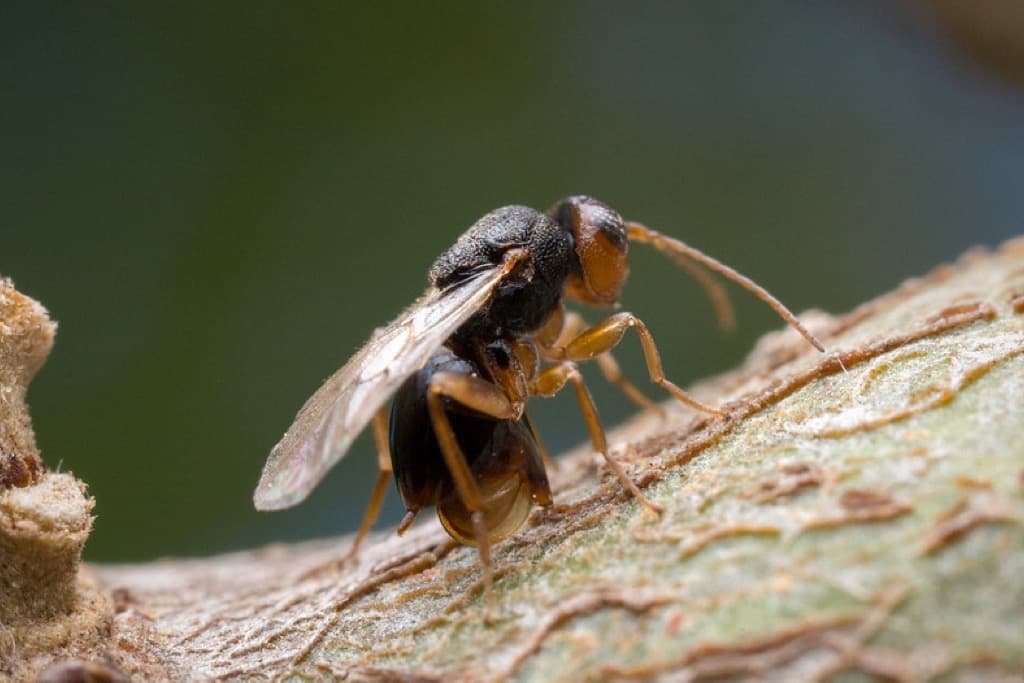
A large group that mostly goes unnoticed. Many are tiny. They lay their eggs in or on other insects and provide a lot of natural control of caterpillars, aphids, and beetle larvae.
Most cannot sting people at all. If you have seen very small wasps hovering around a garden bed, these are probably what you saw.
Handling: Leave them completely alone. They are helping you.
Deciding What To Do
The real question is not the exact species. It is whether the wasp is social, where the nest is, and how big the colony is.
Take action when:
- The nest is social and near a door, walkway, patio, pool, or play area
- The nest is enclosed, in the ground, or inside the house or a block wall
- The colony is large or it is late in the season
- Anyone in the household is allergic to stings
- You are not sure what it is, or you suspect bees rather than wasps
Leave it alone when:
- It is a mud dauber, tarantula hawk, or parasitic wasp
- It is a small paper wasp nest well away from where people walk
The Beneficial Side
It is worth saying plainly: wasps eat a lot of pest insects. A single paper wasp colony removes a real number of caterpillars over a season. Wiping out every wasp on a property is neither realistic nor desirable.
The better approach is targeted. Remove what creates risk and leave what does not.
If you have a nest on your property and would rather have it identified than guess, contact Butter Pest Control.
Dealing with this pest at your place?
Butter serves St. George and southern Utah with free inspections and a re-treatment guarantee. Get an honest quote, no pressure.
Aspen Chournos
Aspen Chournos writes about desert pest pressure and prevention for homes and businesses across St. George and southern Utah.