You can learn a lot from a wasp nest without getting close to it. Its shape, where it is, and how big it has grown tell you what built it, roughly how many insects live inside, and how risky it would be to disturb.
How A Nest Begins
Almost every nest starts with a single insect.
Mated queens spend the cooler months tucked into sheltered spots: under loose bark, in wall gaps, beneath roof tiles, in block wall cavities, or in debris. In St. George's mild climate, they often become active again as early as late winter or early spring. Each queen picks a site and builds the first few cells on her own, lays eggs, and raises the first batch of workers by herself.
Once those workers mature, they take over building and foraging, and the queen focuses on laying eggs. From there the nest grows quickly. Something the size of a walnut in March can be large by July.
Late in the season the colony produces new queens and males. The new queens mate and leave to find shelter, and the old colony gradually dies off as the weather cools. Paper wasps and yellowjackets do not reuse old nests the next year.
That has a practical upshot: an old nest in winter is generally empty. It is still worth removing, because it marks a spot that conditions on your property favor.
Reading The Nest Type
Open umbrella comb, no covering. Paper wasps. A single layer of exposed cells hanging from a short stem. Small colony, usually under a hundred. The least dangerous kind to be near. Found under eaves and patio covers, in door frames, on tile roof edges, inside grills and outdoor furniture, and in play equipment.
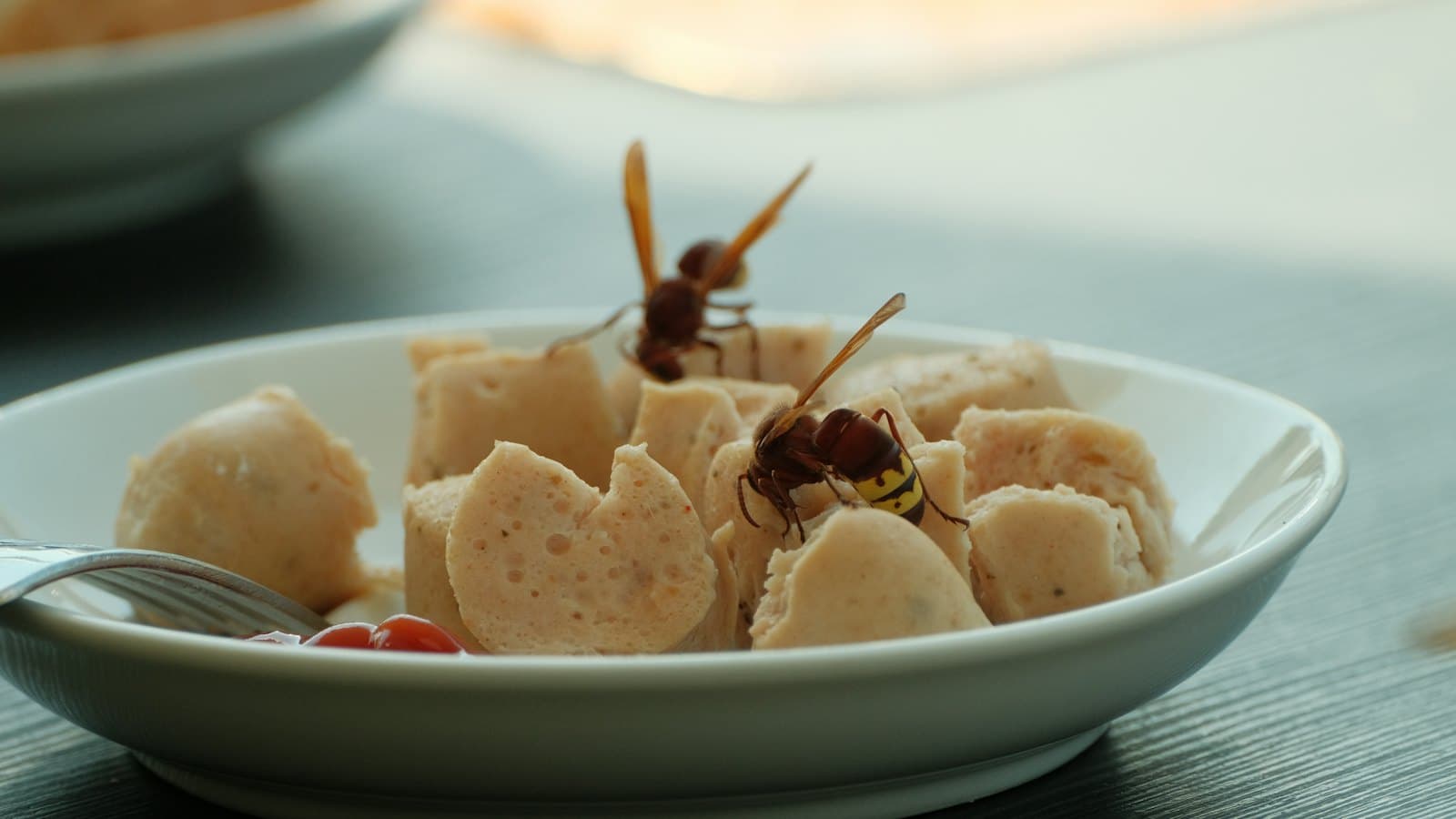
Fully enclosed nest in the ground or a void. Yellowjackets. Usually hidden. What you see is a steady line of insects entering and leaving one hole in the ground, a gap in the stucco, or a crack in a block wall. Colonies can reach thousands by late summer. The most dangerous type by far, because people find it by accident.
Large, gray, enclosed teardrop hanging in the open. Bald-faced hornets. Covered in layered paper with an opening near the bottom, usually hanging from a branch, large shrub, or eave. Uncommon around St. George, but highly defensive when present.
Small mud tubes on a wall. Mud daubers. Solitary, gentle, and helpful, since they stock their nests with spiders. Not a threat and usually best left alone.
Where They Turn Up Around St. George Homes
Wasps look for shelter from sun and wind, protection from predators, and access to water and building material. Around southern Utah homes, that means:
- Under eaves, patio covers, and pergolas
- Beneath and between roof tiles
- Inside wall voids, reached through stucco cracks or utility openings
- In the hollow cores and caps of block walls
- Attics, sheds, and garages
- Grills, patio furniture, and stored equipment
- Play sets and swing sets
- Trees, palms, and dense shrubs
- Underground, often in old rodent burrows
- Inside meter boxes, irrigation valve boxes, and utility boxes
The hidden spots are the ones that cause trouble. A colony inside a wall or block wall can be large before anyone notices more than a few wasps here and there.
Signs Of A Nest You Cannot See
- Wasps flying steadily to one point on the house or wall
- Wasps showing up indoors again and again, often at windows
- A faint papery rustling inside a wall on warm afternoons
- Stains on drywall or ceiling below a suspected nest
- A sudden burst of activity in one part of the yard when you mow or trim
Size And Timing
Nest size is a direct measure of risk, and it grows all season. St. George's long warm season stretches the calendar compared with colder places.
February to April. Queens start nests. Very small, barely defended. The best time to deal with them.
May to June. Workers active, nest growing, defense increasing. Small, easy-to-reach paper wasp nests are still manageable.
July to October. Largest colonies, strongest defense, heaviest scavenging. Leave it to a professional.
November onward. Colonies wind down as nights cool. Behavior can be unpredictable as food runs out.
When Removal Is Safe To Do Yourself
Only under a narrow set of conditions: a small paper wasp nest, early in the season, at or below shoulder height, out in the open, with nobody in the home allergic to stings, treated after dark when the wasps are settled on the nest.
Outside those conditions, do not try it. In particular, never attempt:
- Any nest in the ground
- Any nest inside a wall, block wall, attic, or other void
- Any large enclosed paper nest
- Anything that requires a ladder
- Anything late in the season
- Anything at all if someone in the household is allergic to stings
- Any bee swarm or hive, since Africanized honey bees have been found in the area
The Wall Void Mistake
This one deserves its own section because it is common and it goes badly.
When wasps are flying in and out of a gap in the stucco or a block wall, the natural reaction is to plug the hole. Do not. The colony is inside and will look for another way out, sometimes through the inside wall and into your living space.
Treat first, make sure the colony is dead, and only then seal the gap.
After Removal
Take down the physical nest when you can, because leftover scent can draw new queens to the same spot. Clean the surface. Then deal with why the spot was attractive: seal gaps, screen vents, cap open block walls, and check the same locations again early next spring, because a site that suited one queen will probably suit the next.
If you have a nest on your St. George area property, or a steady stream of wasps that suggests one you cannot see, contact Butter Pest Control. We will identify it, remove it safely, and close up the opening it was using.
Dealing with this pest at your place?
Butter serves St. George and southern Utah with free inspections and a re-treatment guarantee. Get an honest quote, no pressure.
Aspen Chournos
Aspen Chournos writes about desert pest pressure and prevention for homes and businesses across St. George and southern Utah.