People use "wasp" and "hornet" as if they mean the same thing, and in everyday talk that is mostly fine. When there is a nest a few steps from your patio door, though, the difference matters, because these insects nest in different places, defend themselves differently, and call for different handling.
The Taxonomy, Briefly
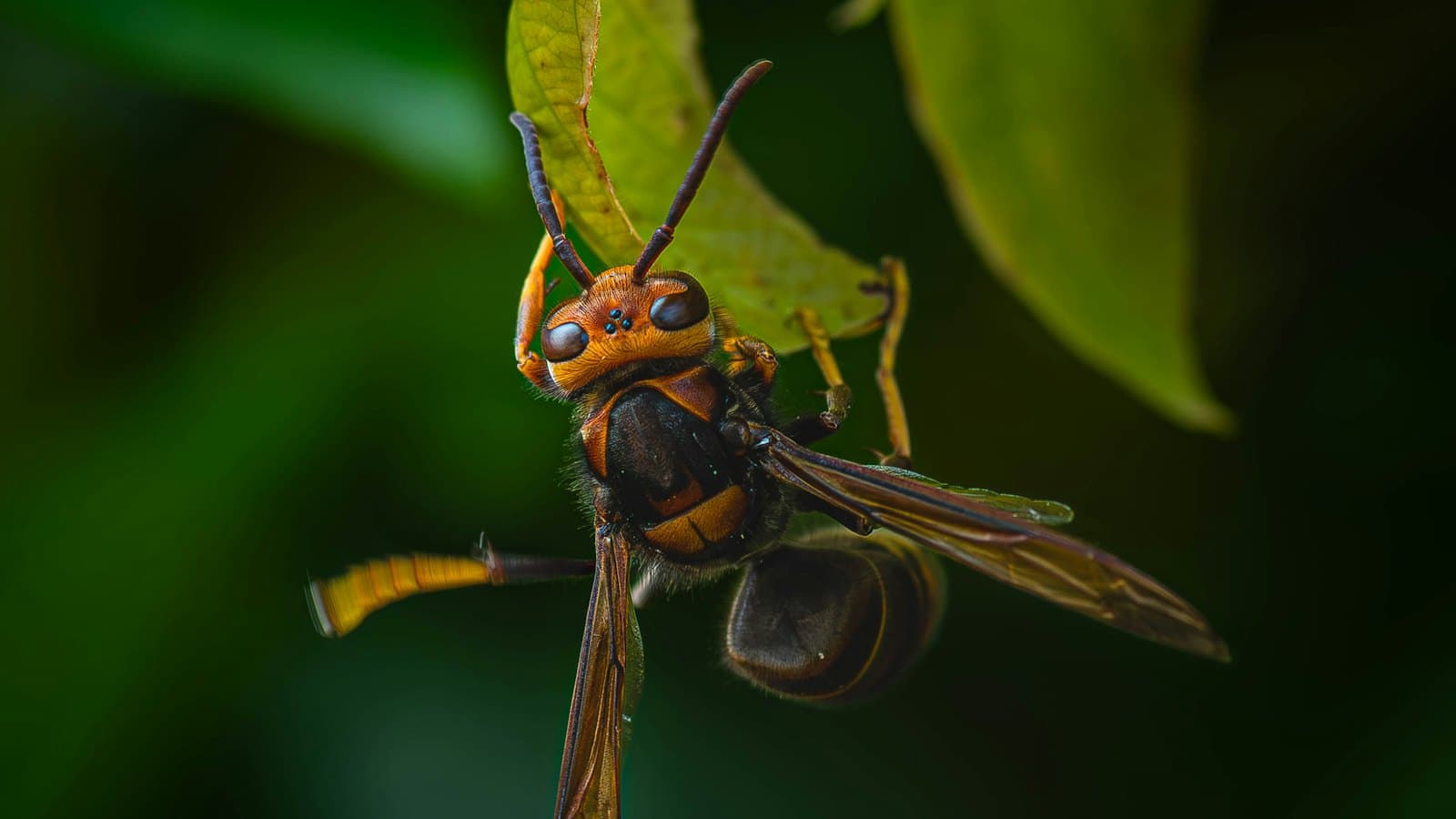
All hornets are wasps. Hornets are one particular group of wasps, known for their larger size and their large, enclosed paper nests.
Common names muddy things. The black-and-white insect called the "bald-faced hornet" is actually a type of yellowjacket. True hornets in the United States are limited mostly to the European hornet, which is not established in Utah.
Bald-faced hornets do occur in Utah but are uncommon in the hot, low desert around St. George. In practice, what Washington County homeowners run into falls into three groups: paper wasps, yellowjackets, and mud daubers. When someone here says "hornet," they usually mean one of the first two.
Paper Wasps
Appearance. Slim and long-bodied, with long legs that hang down in flight. Typically brown, rusty red, or yellow-and-black. Around three quarters of an inch to an inch long.
Nest. An open, umbrella-shaped comb of exposed hexagonal cells hanging from a short stem. Nothing covers it, so you can see the cells and the wasps on them. Common under eaves, inside patio covers, in door frames, on tile roof edges, in block wall caps, and inside grills and play sets.
Colony size. Small, usually a few dozen to around a hundred.
Temperament. The most tolerant of the social wasps. They will sting to defend the nest, but they guard only a small area and generally ignore activity a few feet away.
Practical note. By far the most common nest found on St. George homes, and often in a spot people walk past every day, such as above a door or under a patio cover.
Yellowjackets
Appearance. Shorter and stockier than paper wasps, with crisp, bright yellow-and-black bands. They tuck their legs in when they fly. About half an inch long.
Nest. Fully enclosed in papery layers with one small entrance. Usually hidden in the ground, in old rodent burrows, inside wall voids, under sheds, or in thick shrubs. You often see only a stream of insects coming and going from a single hole.
Colony size. Large. Hundreds to several thousand by late summer and fall.
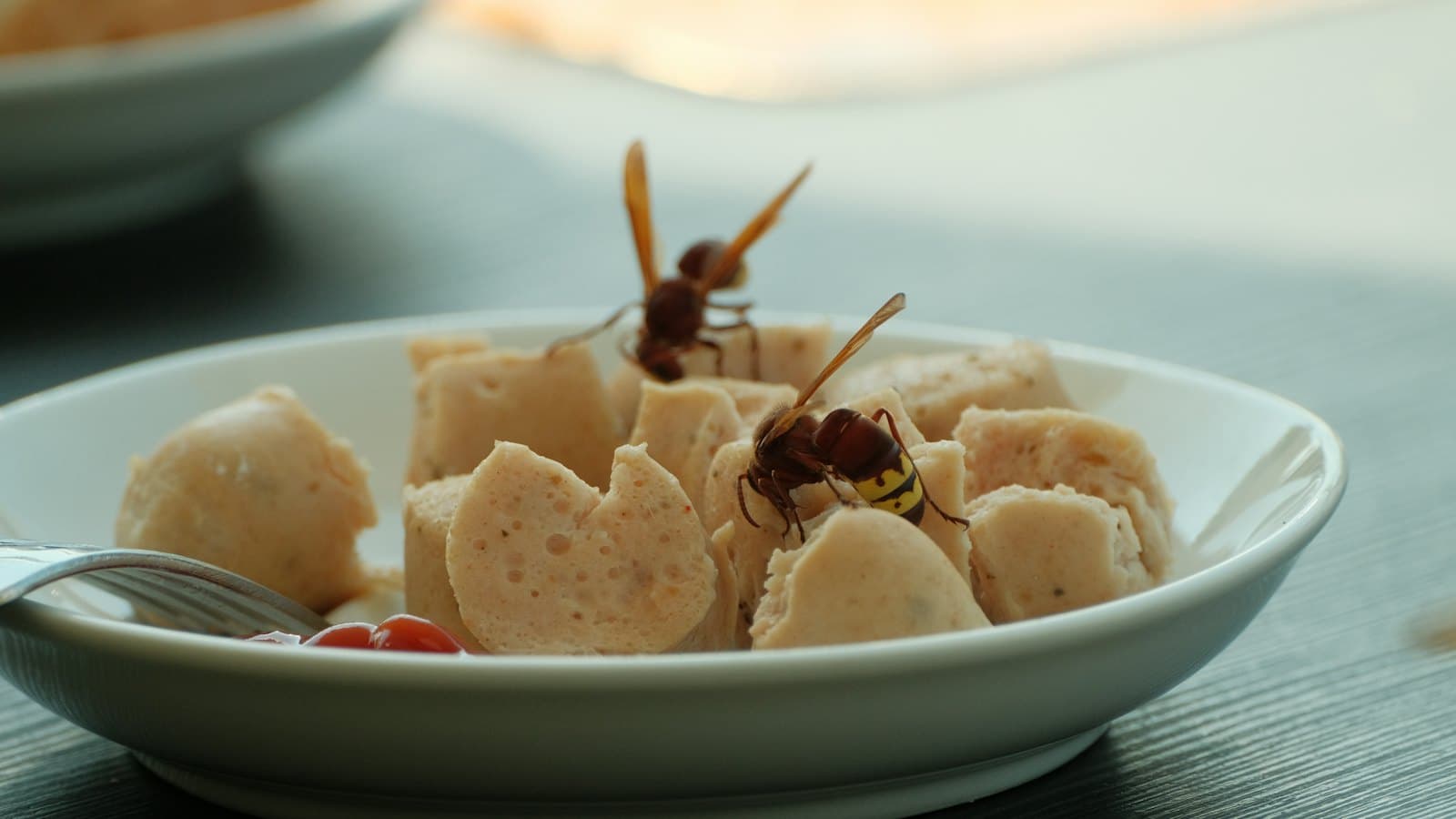
Temperament. Very defensive. Vibration or disturbance near the nest sets them off, they attack in groups, and each one can sting more than once. They also scavenge meat and sweets, which is why they crash backyard barbecues and hang around trash cans.
Practical note. Yellowjackets cause most of the serious stinging incidents. A hidden ground nest is especially risky because mowing, trimming, or stepping near the entrance triggers an instant group response.
Bald-Faced Hornets
Appearance. Larger and heavier than most yellowjackets, black with ivory-white markings on the face and the tip of the abdomen. Around three quarters of an inch.
Nest. The classic large, gray, football- or teardrop-shaped paper nest hanging from a tree branch, shrub, or eave, with an opening near the bottom.
Colony size. Several hundred.
Temperament. Highly defensive, guarding a wider area than paper wasps and willing to chase.
Practical note. They are uncommon around St. George. If you do see a big gray paper nest hanging in a tree, treat it seriously, but do not assume every large wasp is a hornet.
Mud Daubers
These deserve a mention because they are so often mistaken for something dangerous.
Appearance. Very slender with a thread-thin waist, often shiny black or metallic blue, sometimes with yellow markings.
Nest. Small tubes or clumps of dried mud on walls, under eaves, and in garages and sheds.
Temperament. Solitary and gentle. They rarely sting.
Practical note. Mud daubers hunt spiders, including black widows, and are genuinely helpful. Other insects sometimes move into old mud nests, but the daubers themselves are not a threat.
The Differences That Actually Matter
Nest visibility. Paper wasp nests are usually easy to see. Yellowjacket nests usually are not, which is why people stumble onto them and why those encounters tend to be painful.
Defended area. Paper wasps defend a few feet. Yellowjackets defend a good deal more, and hornets more still.
Colony size and timing. Colonies grow all summer in St. George, and yellowjacket nests reach sizes that make an accidental run-in genuinely dangerous rather than just unpleasant.
Food behavior. Yellowjackets come to you, scavenging at picnics and trash cans. Paper wasps and mud daubers mostly do not.
When To Call Rather Than Handle It
A small paper wasp nest in an easy-to-reach spot, dealt with early in the season, is something a careful homeowner can handle.
Most other situations are not. In particular:
- Any nest in the ground, because the response is immediate and coordinated
- Any nest inside a wall, attic, or block wall, because sealing the entrance pushes the colony inward
- Any large enclosed paper nest, including bald-faced hornet nests
- Any nest that requires a ladder to reach
- Any nest found late in the season, when colonies are biggest and most defensive
- Any nest where someone in the home is allergic to stings
- Any swarm or hive of bees, since Africanized honey bees have been found in Washington County
If you have a nest on your St. George area property and are not sure what built it, contact Butter Pest Control. Inspections are free, and it is a lot better than finding out the hard way.
Dealing with this pest at your place?
Butter serves St. George and southern Utah with free inspections and a re-treatment guarantee. Get an honest quote, no pressure.
Aspen Chournos
Aspen Chournos writes about desert pest pressure and prevention for homes and businesses across St. George and southern Utah.