Ask most people what rodent control looks like and they describe a technician setting traps. Traps do matter, but only for the animals already inside. If nobody closes the gaps those animals used, new ones walk in behind them, and the homeowner is back to setting traps the next time the weather turns.
Below is what a complete rodent job should include from start to finish.
Step One: Inspection
Expect this to take a while. It is the stage that decides whether everything after it works.
The technician is answering three questions: which rodent is involved, where it is spending its time, and where it is getting in. Answering them means checking the places rodents use, which are rarely the places where a homeowner happened to spot one.
- The attic, especially along wiring and across the top of the insulation
- The garage, at wall junctions and behind stored boxes
- Behind and beneath kitchen appliances and inside lower cabinets
- Water heater and laundry areas
- The full exterior, from the slab edge up to the roofline
- Pipe, wire, and HVAC penetrations, vents, and tile roof edges
The clues are droppings, urine stains, greasy rub marks on travel routes, chewed edges, gathered nesting material, and tracks through dust. Droppings reveal the species and how fresh the activity is. Rub marks reveal the routes they use every night. Chew marks reveal where they are trying to get through.
You should come away knowing what was found and where. An inspection that ends with a price and no explanation is a red flag.
Step Two: Species Identification
This step shapes the whole plan.
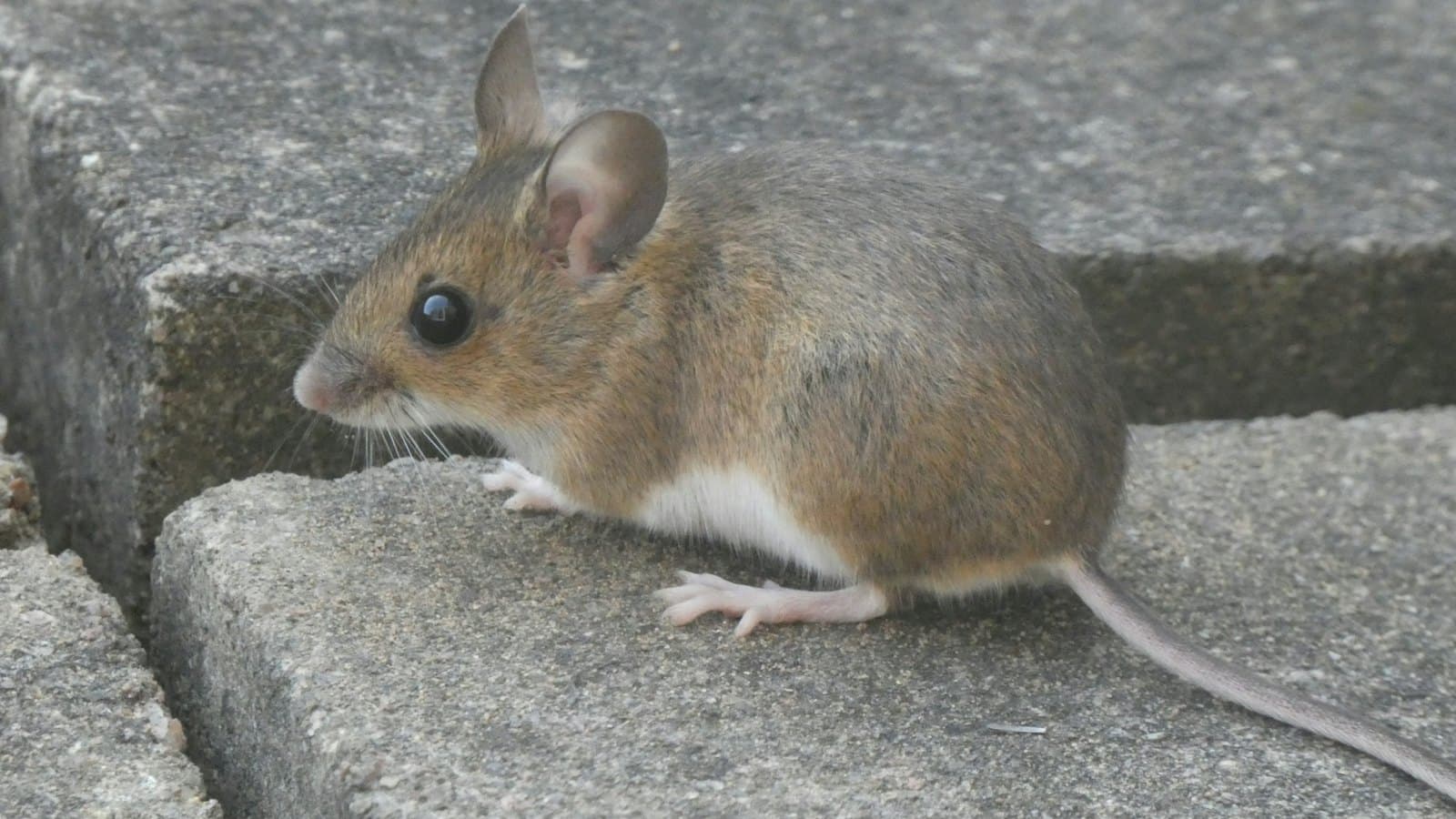
House mice live in a small territory near their nest and investigate anything new. They are not hard to catch, but you need traps in several spots to cover the population.
Deer mice turn up around homes near open desert and brush throughout Washington County, and they carry health concerns that change how droppings and nests have to be cleaned up.
Pack rats (woodrats) build bulky stick-and-debris nests and are notorious here for chewing wiring under car hoods and in HVAC equipment. They often move in from nearby washes and rock outcrops.
Rats in general are more cautious than mice and avoid unfamiliar objects for days, so traps have to be placed patiently and left in position longer.
Getting the species right tells the technician where traps belong, how fine the sealing material has to be, and where the entry points are likely to be.
Step Three: Trapping And Removal
For most homes, snap traps are still the go-to tool. They work quickly, you can confirm every catch, and nothing is left to die out of reach.
Where traps sit matters much more than how many there are. Rodents hug walls and edges instead of running across open floor, so traps belong flush against walls, along runways, beside rub marks, and at the openings they use, never dropped in the middle of a room.
Plan on more than one visit. A good technician checks what was caught, where, and how quickly, then moves traps accordingly. Setting traps once and leaving is not a rodent program.
Rodenticides call for caution inside a home, especially with kids or pets in the house, and because a poisoned animal can die somewhere inside a wall. When bait is part of the plan it should sit in locked, tamper-resistant stations, and someone should be able to explain why it was chosen.
Step Four: Exclusion
Whether the problem returns is decided here.
Mice squeeze through openings of about a quarter inch, and rats need roughly half an inch. Those are smaller gaps than most people expect, so the openings that matter are often ones a homeowner walks past every day.
Typical entry points on St. George area homes:
- Gaps where tile roofing meets the fascia and at the open ends of roof tiles
- Attic and gable vents with weak or torn screening
- Openings around plumbing, electrical, and HVAC lines
- Worn garage door seals and gaps at the corners
- Cracks in stucco near the slab and gaps at the weep screed
- Gaps where block walls tie into the house
- Unscreened dryer and exhaust vents
The materials make or break the job. Hardware cloth, copper mesh, stainless steel wool, sheet metal, and quality sealant last. Spray foam on its own does not, because rodents chew right through it. Foam can fill space behind mesh, but it should never be the barrier.
Nothing predicts whether you will need help again next year as well as the quality of the exclusion work.
Step Five: Sanitation And Cleanup
Droppings, urine, and nests carry disease risk, and sweeping or vacuuming them dry throws particles into the air.
Doing it right means airing out the space, soaking the material with disinfectant before picking it up, wearing proper protection, and bagging everything sealed. Insulation that is badly soiled may have to be replaced.
Cleaning also has a pest-control payoff. Rodents leave scent trails that lead other rodents to the same openings, and removing that scent lowers the chance of a repeat.
Step Six: Follow-Up And Monitoring
At least one return trip should be part of the plan, to check traps, confirm activity has stopped, and make sure the sealing is holding.
Homes that back onto open desert, washes, or undeveloped lots, which describes a lot of Washington County, often benefit from ongoing monitoring. Rodent pressure rises and falls with the seasons and with what is happening on the land next door.
Signs Of A Job Done Right
- Findings explained in writing, not just a total
- The species confirmed, not guessed
- Sealing built into the plan rather than sold afterward as an add-on
- Long-lasting materials used at every opening
- A follow-up visit already on the calendar
- Straight answers about safe cleanup
- An honest list of what you can handle on your own
How Long It Usually Takes
A simple mouse problem in a reasonably tight house tends to wrap up in two to three weeks. Rats, pack rats, heavy infestations, or homes with many openings can take six weeks or longer.
Anyone who promises the problem will be gone the same day is talking about setting traps, not solving a rodent problem.
If you are hearing scratching overhead or finding droppings in your St. George home, reach out to Butter Pest Control. We will inspect the whole structure, walk you through what we find, and seal it so the problem does not come back.
Dealing with this pest at your place?
Butter serves St. George and southern Utah with free inspections and a re-treatment guarantee. Get an honest quote, no pressure.
Aspen Chournos
Aspen Chournos writes about desert pest pressure and prevention for homes and businesses across St. George and southern Utah.