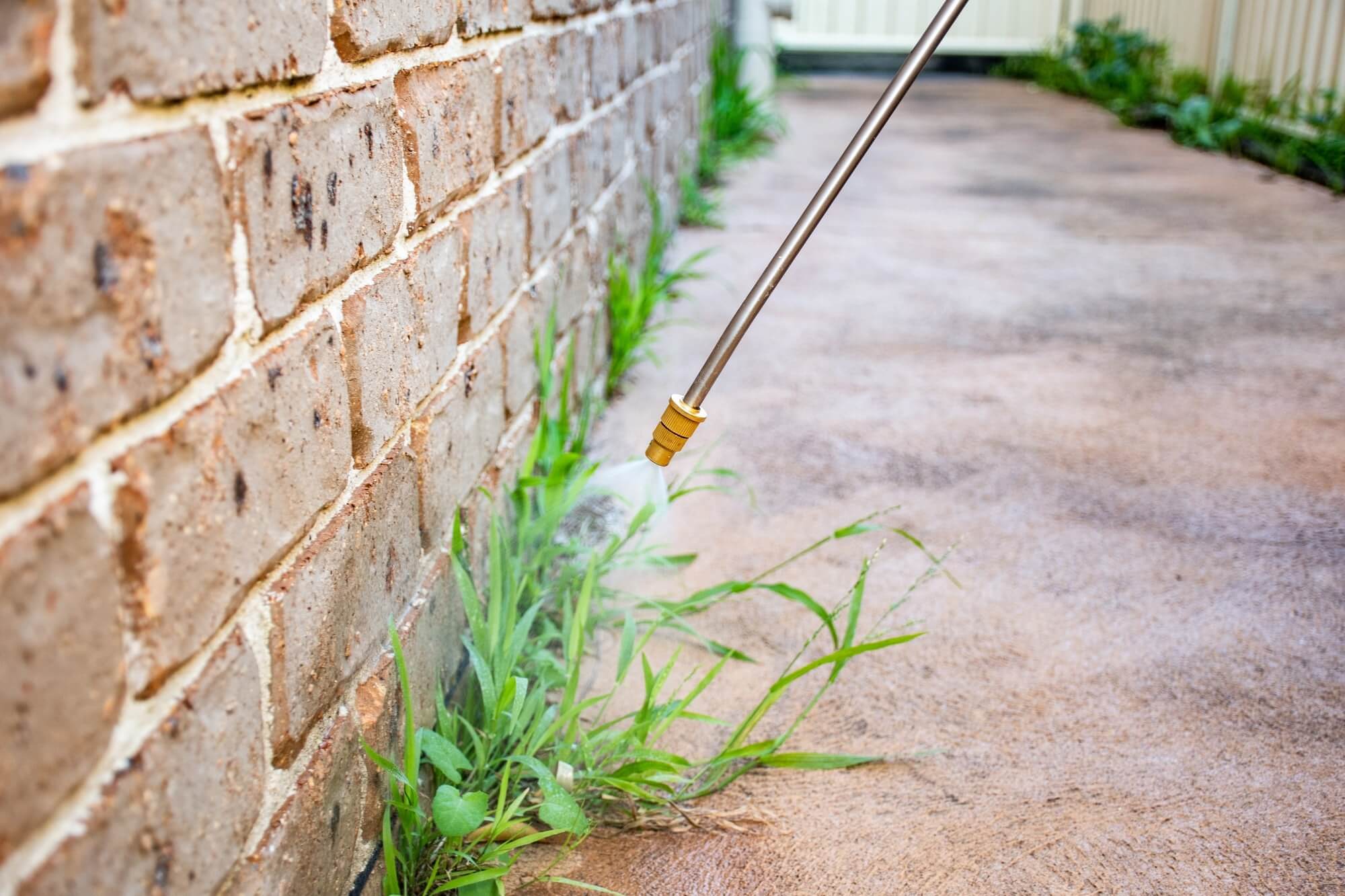
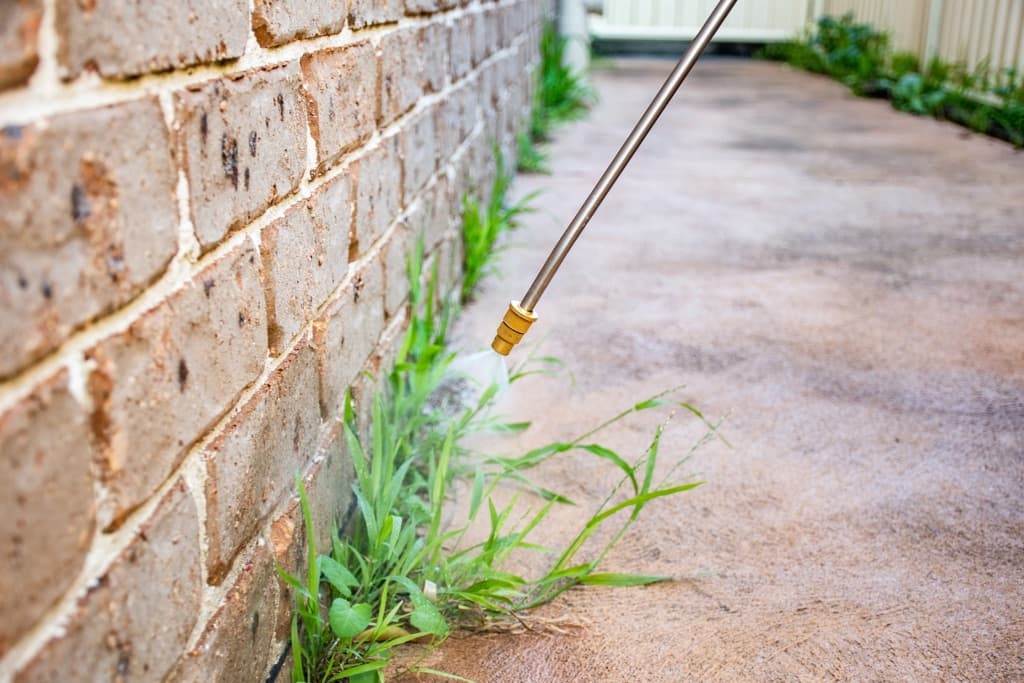
A yard full of weeds is not only a cosmetic issue. Unmanaged growth creates a sheltered path that moves pests from the outer edges of your property inward, and that path ends at your foundation.
Once you see how that path works, it gets much easier to break.
The Corridor Effect
Crossing open ground is risky for a pest. Birds and lizards can spot it, the sun can bake it, and there is nowhere to hide. In southern Utah, where bare gravel can get blisteringly hot by midmorning, most pests avoid open stretches whenever they can.
Weeds remove that obstacle. A continuous band of growth running from a back wall to a planting bed by the house gives pests a protected route, and they use it. Rodents travel along it, ants forage through it, spiders and scorpions hunt in it, and ground-nesting yellowjackets set up inside it.
Continuity is what matters. A lone weed in the middle of the gravel is an island. A weedy strip that connects the property line to the house is a highway.
Moisture Is The Underlying Driver
In the Mojave, water is the limiting factor for most pests, and vegetation is very good at holding onto it.
Weeds shade the soil, slow evaporation, and trap a little humidity right at ground level. Under a thick mat of growth, the ground can stay damp for days after watering, while the open gravel next to it dries out within hours.
That pocket of moisture is what lets weedy areas support earwigs, crickets, silverfish, millipedes, and the ant species that need damp soil to nest. Cut back the vegetation and the moisture goes with it, along with much of the pest pressure.
The Food Chain It Supports
Weeds feed pests at every level.
Seeds feed mice, pack rats, and harvester ants. Leaves feed aphids, leafhoppers, and other plant-eating insects. Those insects feed spiders, scorpions, and predatory bugs. Flowering weeds bring in bees and wasps.
The result is a system that keeps itself going just a few feet from your walls. The pests are not passing through. They live there, breed there, and spread toward whatever is next door, which is usually your house.
Why It Ends At Your Foundation
All of this starts outside. The trouble is what waits at the end of the path.
Houses have openings: weep screeds at the base of stucco, expansion joints, utility penetrations, gaps under garage doors, and spaces around AC lines. Pests that have followed a sheltered path to the wall arrive at those openings with cover right up to the point of entry.
Weeds against the wall also undermine perimeter treatments. A treated band only works if pests have to cross it. Plants growing over or against the wall let them go around it, up a stem, and onto the stucco.
What To Do About It
Create a clear band around the house. The most valuable change you can make is a maintained strip along the foundation with no weeds, bark, or stored materials. Eighteen inches is a minimum; wider is better if the lot allows. That one step breaks the corridor, exposes rodent activity, makes entry points easy to see, and lets a perimeter treatment do its job.
Handle the edges, not just the middle. People tend to manage the weeds they can see from the kitchen window and forget the side yards, the strip behind the block wall, and the area behind the shed. Those forgotten edges are where the corridor starts. Control has to reach the whole property to break it.
Get ahead of seed. A weed that goes to seed has already multiplied next season's problem and fed the rodents along the way. In southern Utah, weeds sprout fast after winter rains and again after monsoon storms, so early treatment prevents far more than late cleanup.
Fix the irrigation. Sprinklers that spray the walls, drip emitters that leak, and beds that get more water than the plants need all create the damp conditions that keep the corridor alive. Point heads away from the house and fix leaks as soon as you find them.
Be deliberate about what you plant. Planting beds are fine. Beds that touch the wall, hold dense groundcover, and stay wet are not. Keep plants trimmed back from the house, favor low-water desert species near the foundation, and leave some open air and light at ground level.
Clear out the clutter that comes with it. Weedy areas usually collect other things: dead palm fronds, extra pavers, old pots, leftover building material. Each adds more shelter, and clearing it out costs nothing but an afternoon.
Doing It Once Is Not Enough
Weeds come back. In Washington County, they return quickly after irrigation, winter rains, and late-summer storms, and the corridor can reform within weeks.
Ongoing weed control is what keeps the break in place. Paired with a perimeter pest program, it covers both sides of the problem: the habitat that supports pests and the pests themselves.
Butter Pest Control provides weed control alongside pest service for homes across St. George and Washington County. Contact us to talk about keeping your yard from working against you.
Dealing with this pest at your place?
Butter serves St. George and southern Utah with free inspections and a re-treatment guarantee. Get an honest quote, no pressure.
Aspen Chournos
Aspen Chournos writes about desert pest pressure and prevention for homes and businesses across St. George and southern Utah.