Spiders are pure predators. At no point in their lives do they feed on plants. That means the link between weeds and spiders is completely indirect, and seeing how that indirect link works is what lets you do something about it.
The Chain, In Order
There are three steps.
First, weeds feed plant-eating insects. Aphids, leafhoppers, thrips, plant bugs, and many others feed on leaves, stems, and seeds. More kinds of weeds mean more kinds of insects.
Second, those insects attract other insects. Gnats, small flies, and predatory bugs move in to feed on them. Dead plant material at the base of the weeds supports sowbugs, springtails, and crickets.
Third, all of it feeds spiders. A weedy patch packs prey together densely enough that spiders can hunt it efficiently, which is why spider numbers in neglected growth run far higher than in tidy ground nearby.
Take away the first link and the rest of the chain shrinks on its own.
Moisture Does As Much Work As Food
Food is only half of the picture. The other half is moisture.
The Mojave is extremely dry, and spiders lose water through their bodies. During a St. George summer, that is a real constraint. Thick vegetation shades the soil and holds humidity close to the ground long after the surrounding gravel has baked dry.
That cooler, damper pocket is why weedy spots support wolf spiders and other ground hunters so well. It is livable habitat in a landscape that otherwise is not.
Web Architecture Needs Structure
Spiders that build webs need one more thing: something to attach them to.
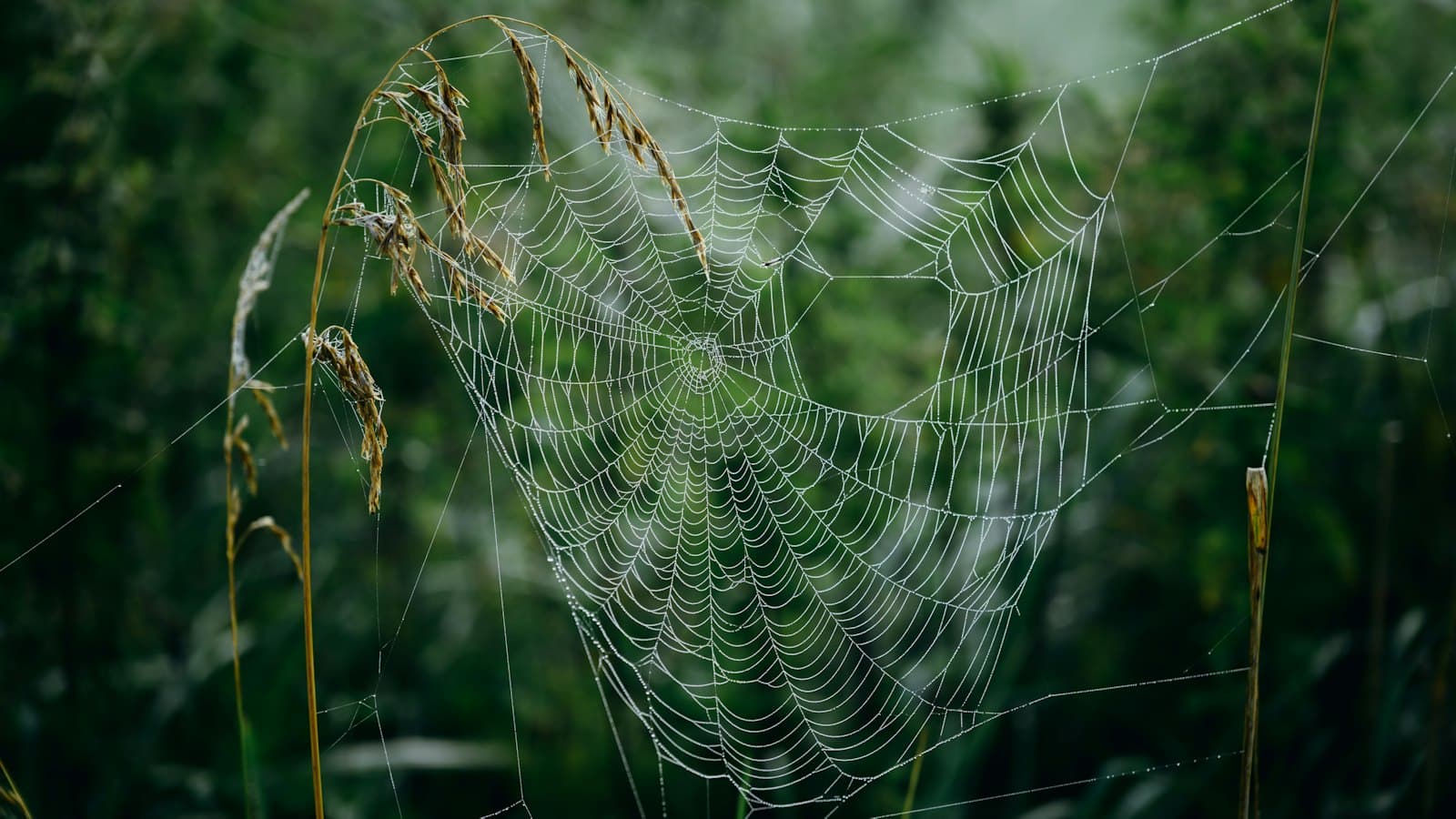
Bare gravel and decomposed granite offer nothing. Weeds offer a forest of stems, seed heads, and branches at just the right spacing for orb weavers and funnel weavers. A weedy strip along a block wall can hold dozens of webs in a few feet.
This is also why webs bunch up in certain places, around shrubs, along walls, and in tall growth, instead of spreading evenly across a yard.
Why This Ends Up Indoors
Spiders in a weedy lot down the street are not much of a concern. Spiders in the weeds touching your foundation are.
Ground-dwelling spiders get into houses at ground level, through the same gaps every other crawling pest uses. Weeds growing right up to the wall give them cover all the way to the opening, with no exposed, sun-baked ground to cross.
Vegetation against the foundation also lets spiders skip over a perimeter treatment, which only works if pests have to walk across it.
The result is that indoor spider sightings line up closely with how the first few feet around the house look, much more than with the condition of the rest of the yard.
What Changes When You Control Weeds
Getting weeds under control cuts down on spiders in several ways at once:
- Prey insects decline as their host plants disappear
- Ground-level humidity drops, making the area less comfortable
- Web anchor points go away
- The sheltered path from the property line to the foundation is broken
- Perimeter treatments start working as intended again
- Whatever activity remains is out in the open and easier to deal with
That combination is why properties on a regular weed control program tend to see fewer spiders than pest treatment alone would explain.
Where To Focus
Some areas matter more than others. In order:
Along the foundation. The first 18 inches to two feet next to the house. The biggest payoff by far.
Block walls and property edges. This is usually where the corridor starts, and it is often ignored because nobody looks back there.
Around sheds and outbuildings. Storage sheds and detached garages build up spider populations that later spread.
Under decks, patios, and raised structures. Shaded, a little damp, and almost never checked.
Irrigated beds that touch the walls. Water, plants, and wall contact together are the worst combination.
Practical Steps
- Keep a clean, weed-free strip along the foundation
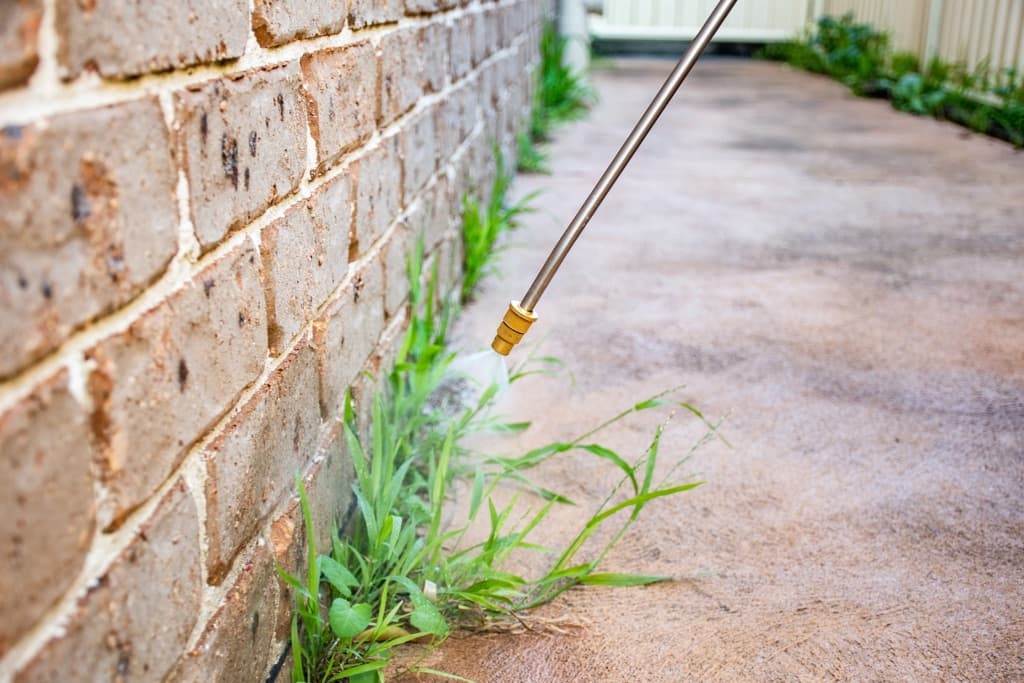
- Treat weeds along block walls, side yards, and edges, not just where they are visible
- Trim landscape plants so they do not touch the stucco
- Adjust drip and sprinkler lines so they do not wet the walls or the strip next to them
- Clear dead leaves, palm fronds, debris, and stored items away from the house
- Use fewer or warmer-toned outdoor lights, which draw fewer of the night-flying insects spiders wait for
Combining Weed And Pest Control
On their own, weed control and spider control each solve part of the problem. Together, they handle both the spiders and the habitat that keeps them going, so the results last longer.
Butter Pest Control offers both across St. George and Washington County. If there are more spiders around your property than you would like, contact us and we will look at what is supporting them.
Dealing with this pest at your place?
Butter serves St. George and southern Utah with free inspections and a re-treatment guarantee. Get an honest quote, no pressure.
Aspen Chournos
Aspen Chournos writes about desert pest pressure and prevention for homes and businesses across St. George and southern Utah.