As the days get shorter and the evenings cool off, plenty of pests start looking for shelter, and ants are no exception. They're busiest in the warm months, but fall changes their priorities as colonies get ready for the slower season. In southern Utah, where winters are mild, that shift doesn't mean ants disappear; it means they move closer to reliable food and warmth. Knowing how cooler weather affects ant behavior helps homeowners spot the early signs and take action before a colony settles in.
Seasonal Shifts in Ant Activity
Ants respond quickly to temperature and moisture. As the desert cools, their daily routine changes, and their focus turns to securing food and a protected nest before winter. Fall is a transition period in the colony's year, with energy redirected toward building reserves and finding shelter.
Typical changes include:
- Shorter foraging trips: As outdoor food becomes harder to find, ants stay closer to home to save energy.
- Nest relocation: Some colonies move deeper into the soil, under slabs, or into wall voids where temperatures are steadier.
- Food storage: Workers collect sugars, fats, and proteins to carry the colony through the slower months.
- Indoor movement: Kitchens, bathrooms, and utility areas become attractive refuges.
That explains why many homeowners notice more ants indoors in late fall. A colony may already be living under the slab or inside a wall, foraging in small, hidden areas.
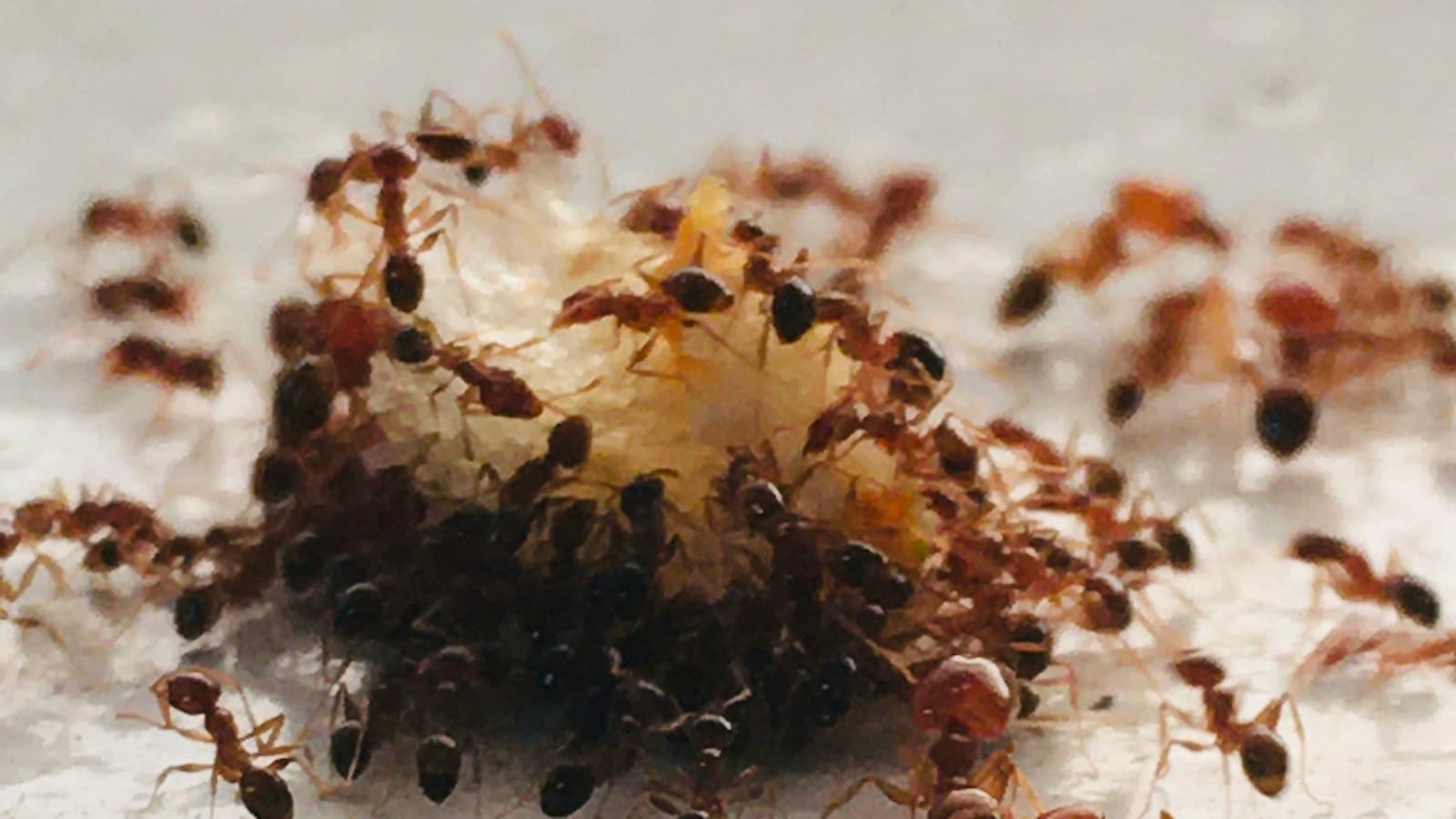
How ants move can tell you a lot. Organized, steady trails usually reflect a strong colony nearby.
Why Ants Invade Homes in Fall
As temperatures fall, ant colonies focus on keeping conditions stable. They need consistent warmth and moisture, and in the desert both get harder to find outdoors once the season turns. Homes provide them, along with crumbs, grease, and sugary spills.
Fall infestations often start in:
- Kitchens: Food prep areas leave behind oils and sweets that draw ants in.
- Bathrooms and laundry rooms: Damp spaces mimic the conditions ants like for nesting.
- Wall voids: Protected, undisturbed spaces shield colonies from temperature swings.
- Plumbing lines: Pipes provide moisture and a route through the house.
Once ants establish a colony indoors, they can stay active year-round, especially in a climate as mild as ours. That's why getting ahead of ants before the season changes is so valuable.
Why DIY Methods Often Fail in Cooler Months
Many homeowners try a DIY fix as soon as ants appear indoors. Fall infestations usually need more than a surface treatment, though. Colonies often nest deep within the structure, which makes it hard to reach the queen, the one ant the colony's survival depends on.
Common DIY shortcomings:
- Short-lived results: Sprays and traps kill the foragers you see, not the colony.
- Hidden nests: Without the right tools and training, entry points and nest sites are hard to find.
- Missed gaps: Ants can use openings barely bigger than a pinhead.
- Species differences: Different ants respond differently to baits, so the wrong choice gets ignored.
Because ants adapt quickly, DIY efforts often lead to repeat infestations. A professional inspection uncovers the entry points and structural weak spots that are easy to overlook, and regular inspections help catch new ant activity before a colony expands indoors.
Professional Ant Control Strategies for Fall and Beyond
Professional technicians approach ant control with an integrated plan meant to eliminate colonies and keep new ones out. Instead of a one-time spot treatment, the focus is on the conditions that brought the ants in and on long-term exclusion.
Effective fall and winter control includes:
- Thorough inspection: Technicians follow trails back to entry points and nest sites.
- Targeted baiting: Slow-acting baits that foragers carry back to the colony.
- Perimeter treatment: Applications around the foundation that stop outdoor colonies from moving in.
- Moisture management: Spotting leaks, irrigation overspray, or damp areas that support ants.
- Sealing: Closing cracks and replacing worn weatherstripping to cut off entry.
Ant behavior changes through the year, and adjusting treatment to the season makes it more effective. Early fall is a particularly good window, since colonies are still active but starting to relocate.
Preparing for Winter: Long-Term Prevention Tips
In St. George, winter slows ants down without stopping them completely. Colonies under slabs or inside walls can stay active and show up on any warm day. Prevention before winter makes a big difference in how much activity you see once spring arrives.
To keep ants under control year-round, homeowners can:
- Seal entry points: Close gaps around windows, doors, and utility lines.
- Store food carefully: Use sealed containers and clean up crumbs and spills right away.
- Control moisture: Fix leaks, keep sink areas dry, and adjust irrigation as temperatures drop.
- Keep landscaping in check: Trim plants and clear debris away from exterior walls.
- Schedule winter service: Professionals can find hidden colonies before they grow.
Fall preparation keeps ants out and also discourages other pests, like spiders, scorpions, and rodents, that look for shelter as the weather cools. Regular maintenance keeps the home protected through every season.
Keep Ants Away All Year
Cooler fall weather changes how ants behave and draws them closer to your home. Understanding those patterns lets you act before a problem gets out of hand. For dependable protection that adjusts through every season, schedule service with Butter Pest Control and keep your home covered year-round.
Dealing with this pest at your place?
Butter serves St. George and southern Utah with free inspections and a re-treatment guarantee. Get an honest quote, no pressure.
Aspen Chournos
Aspen Chournos writes about desert pest pressure and prevention for homes and businesses across St. George and southern Utah.