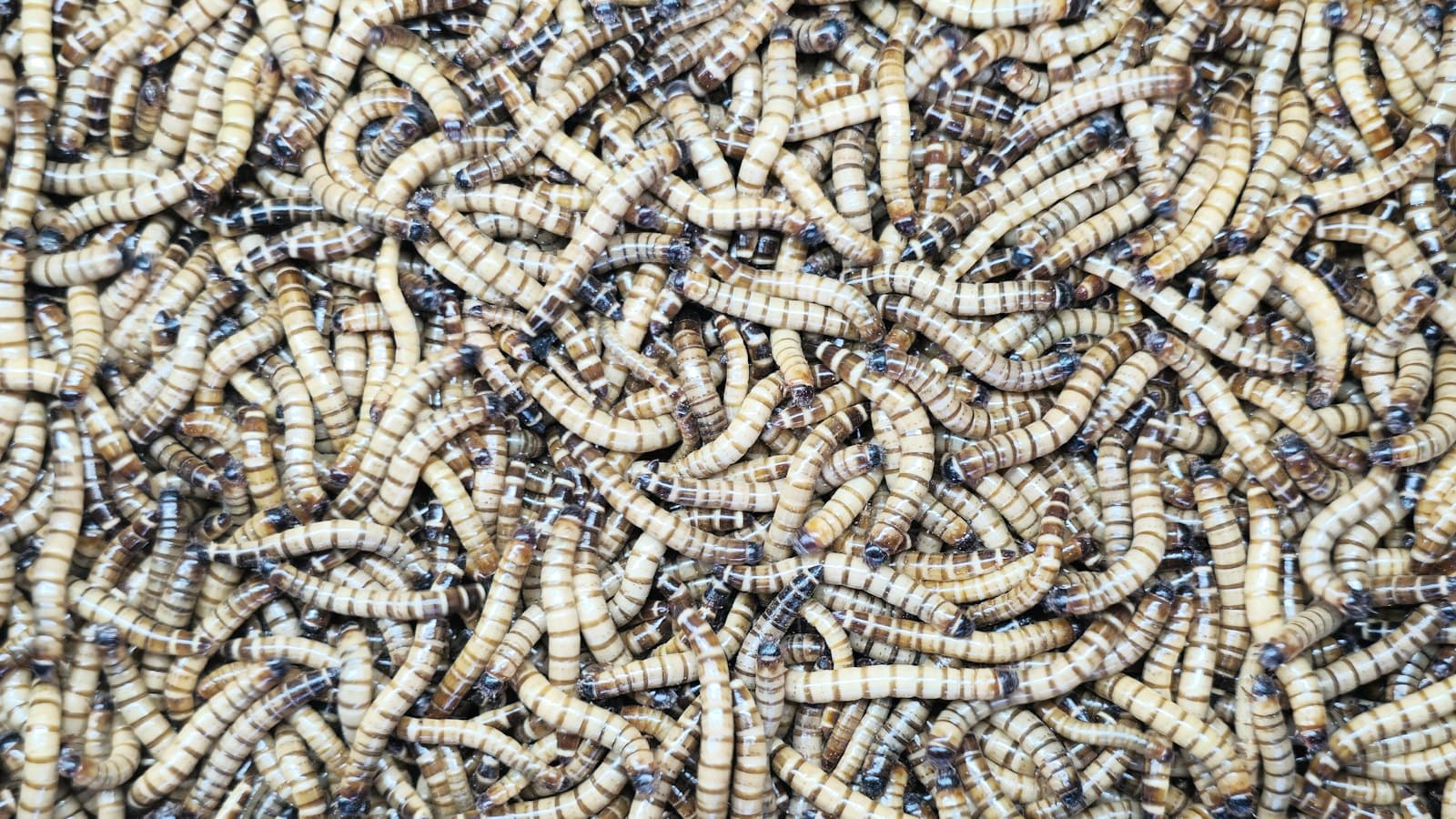
No, and the difference is more helpful than it sounds. When someone finds little worm-like creatures in the pantry, the carpet, or the trash can, what those larvae grow into tells you what the problem is and where it started.
True Worms Are Not Insects At All
First, a quick separation. Earthworms, roundworms, and flatworms are true worms. They are not insect larvae, they never change into anything else, and they are not what turns up in a kitchen cabinet.
Earthworms sometimes show up on a garage floor or patio after heavy watering or a monsoon downpour. They are harmless and simply crawled out of soaked soil.
When people talk about "worms" in the house, they almost always mean the larval stage of an insect.
What Larvae Actually Are
Insects with complete metamorphosis go through four stages: egg, larva, pupa, and adult. The larva is the eating stage, built for feeding and growing, which is why it looks nothing like the adult.
Larvae come in a few worm-like forms:
- Grubs - C-shaped and pale, with a clear head and legs. These are beetle larvae.
- Maggots - tapered and legless, with no obvious head. These are fly larvae.
- Caterpillars - segmented, with true legs up front and fleshy prolegs along the body. These are moth and butterfly larvae.
- Bristly larvae - fuzzy or tufted and often carrot-shaped. These are carpet beetle larvae.
So some turn into beetles, while others become flies, moths, or even wasps.
Sorting Out What You Found
In most cases you can tell them apart without a magnifying glass.
Legs. Beetle larvae have three pairs of legs near the head. Fly larvae have none. Caterpillars have three pairs of true legs plus soft prolegs further back.
Head. Beetle larvae and caterpillars have a distinct head, often darker than the body. Fly larvae taper to a point with no defined head.
Texture. Carpet beetle larvae are noticeably hairy. Most fly larvae are smooth. Caterpillars vary.
Location. Often the most telling clue of all.
Location Tells You The Story
In flour, cereal, pet food, or birdseed. Either pantry beetle larvae or Indianmeal moth larvae. Moth larvae leave silky webbing in the food, which gives them away. Either way, an item is infested, usually one that came home from the store that way.
In carpet, closets, or under furniture. Most likely carpet beetle larvae. Bristly and slow, often found along carpet edges or in quiet corners. They eat wool, pet hair, and collected debris, and they damage natural-fiber fabrics.
Near a trash can, drain, or garbage area. Fly larvae. They point to decaying organic material, like a forgotten spill, food stuck in a bin, or buildup in a drain. They become flies, not beetles. In a St. George summer, trash cans sitting in the heat can produce maggots surprisingly fast.
In firewood or wood structures. Wood-boring beetle larvae. Firewood brought indoors is the usual, harmless explanation. Larvae coming out of the home's framing is a different and more serious finding, and it is worth ruling out termites at the same time.
In houseplant soil. Usually fungus gnat larvae. They mean the plant is being overwatered, and they turn into small flying gnats.
In a bathroom or kitchen drain. Drain fly larvae, feeding on the slimy film inside the pipe.
Why This Matters Practically
Each of these points to a different source and a different fix.
Spotting larvae and spraying the room does nothing, because the larvae are a symptom of something else: an infested box of food, a closet with stored wool, buildup in a drain, an overwatered plant. Remove the source and the larvae stop showing up. Leave it and they keep coming back no matter what you spray.
That is why taking two minutes to identify them is worth it.
What To Do By Type
Pantry larvae: check every dry good, including pet food and birdseed, throw out anything infested, vacuum the shelves, and store the rest in sealed hard containers.
Carpet beetle larvae: vacuum thoroughly, including under furniture and along edges, clean and seal stored natural fibers, and clear dust and dead insects from vents and light fixtures.
Fly larvae: find and remove the decaying material, scrub out trash cans, keep bins shaded and closed, and treat drains with an enzyme cleaner rather than bleach.
Fungus gnat larvae: water less and let the soil dry out between waterings.
Wood-borer larvae: keep firewood outside; if larvae are coming out of structural wood, have it inspected.
When To Call
Get help if larvae keep showing up after you have removed the obvious source, if you find them in structural wood, if fabrics are getting damaged, or if you just cannot tell what you are dealing with.
Larvae that keep returning almost always mean the real source has not been found, and finding it is exactly what an inspection is for.
If you are finding larvae in your St. George home, contact Butter Pest Control and we will identify them and trace them back to where they are coming from.
Dealing with this pest at your place?
Butter serves St. George and southern Utah with free inspections and a re-treatment guarantee. Get an honest quote, no pressure.
Aspen Chournos
Aspen Chournos writes about desert pest pressure and prevention for homes and businesses across St. George and southern Utah.