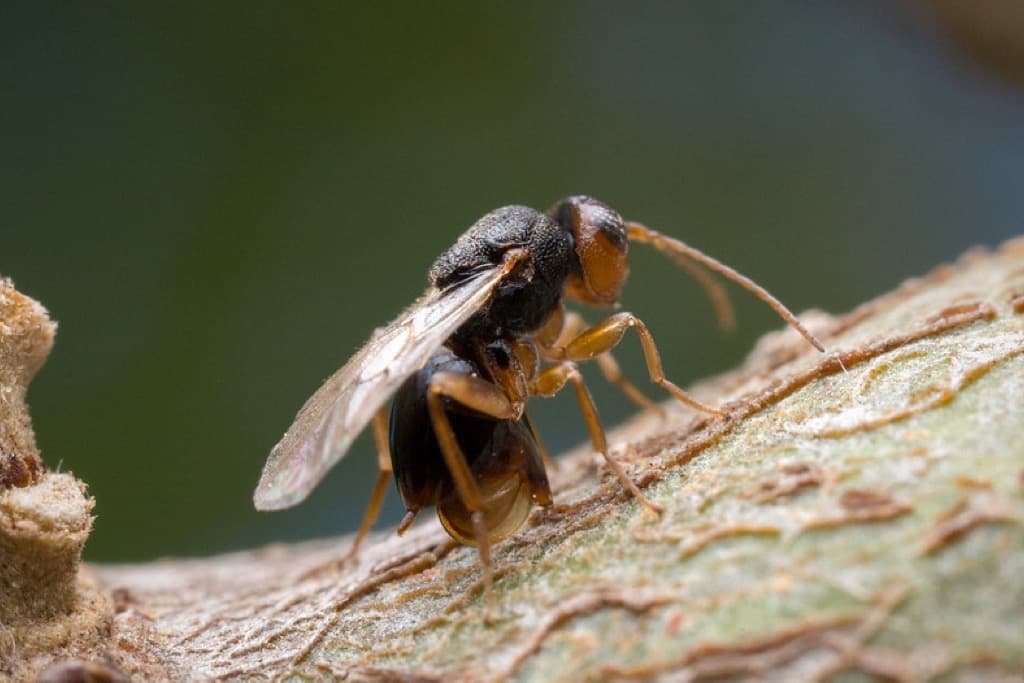
Spot a lumpy, round growth on an oak twig or a rose cane and it's natural to wonder what made it and whether it's something to worry about. Often the answer is a gall wasp, a tiny insect most people never actually see. The word "wasp" tends to set off alarm bells, so it's worth clearing up what these insects are and what kind of risk they pose.
Below, we'll walk through what gall wasps do, whether they're a concern for people, and how to handle them if they're affecting your plants.
Understanding Gall Wasps
Gall wasps are best known for the growths, called galls, that they cause plants to produce. They're a quiet part of the natural world and have very little to do with people. Still, the name raises a reasonable question about whether they can hurt you.
What is the Purpose of a Gall Wasp?
A female gall wasp lays her eggs in plant tissue, and chemical signals from the egg and developing larva prompt the plant to grow a swelling around it. That gall becomes the larva's shelter and food source until it matures and chews its way out. It's an unusual relationship: the insect essentially gets the plant to build it a nursery.
Gall wasps are one small piece of a much larger web of insects that live on plants. Gardeners may find them frustrating, but in most landscapes they're a minor, cosmetic presence rather than a serious threat.
Common types of gall wasps
There are hundreds of gall wasp species, and most are picky about their host plant. Many specialize in oaks, which in our area means landscape oaks in town and scrub oak at higher elevations like Pine Valley. Others target roses and a handful of other ornamentals. Knowing which plant is affected, and what the gall looks like, goes a long way toward identifying the species and deciding whether it needs attention.
Health Impact on Humans
So, are gall wasps dangerous to people? In practical terms, no. They don't sting, they aren't aggressive, and they have no interest in you. Any problems tend to be indirect and uncommon:
- Allergies and skin irritation: A small number of people may react to handling galls or plant material, but this is rare.
- Respiratory concerns: Large piles of old, decaying galls can grow mold or mildew, which may bother people with sensitive airways. In our dry climate this is seldom an issue.
How Do You Get Rid of Gall Wasps?
For homeowners who care about the look and health of their trees and roses, gall wasps can be a nuisance. Managing them usually means combining prevention with some hands-on work. The most effective step is to prune out affected twigs and branches and throw them away before the adults emerge. That removes the developing larvae and cuts down on the next generation.
Some growers also use barrier-type products to discourage egg-laying. Horticultural oils, the same kind used on many ornamental and fruit tree pests, and kaolin clay coatings can make plant surfaces less attractive to egg-laying adults.
Gall wasps generally don't travel far and tend to reinfest the same plant they came from, so consistent pruning of galls can make a real dent in the problem over a few seasons. If that isn't enough, a professional can look at the plant and the pattern of damage and suggest next steps.
Keep in mind that broad-spectrum insecticides often do little against gall wasps, since the larvae are sealed inside the gall, and they can harm beneficial insects. The right approach depends on the plant, the species, and how heavy the infestation is.
Understanding Gall Wasps: A Minor Concern for Plant Health
Gall wasps aren't a direct threat to people. They're small, harmless to humans, and mostly a concern for the appearance and vigor of certain plants. If you find galls in your yard, there are practical ways to keep them in check.
The next time you notice strange growths on your oaks or roses, there's no need to panic. If you'd like a second opinion on what's affecting your landscape, or you're dealing with stinging wasps that actually are a problem, Butter Pest Control can take a look and help you decide what, if anything, needs to be done.
Dealing with this pest at your place?
Butter serves St. George and southern Utah with free inspections and a re-treatment guarantee. Get an honest quote, no pressure.
Aspen Chournos
Aspen Chournos writes about desert pest pressure and prevention for homes and businesses across St. George and southern Utah.