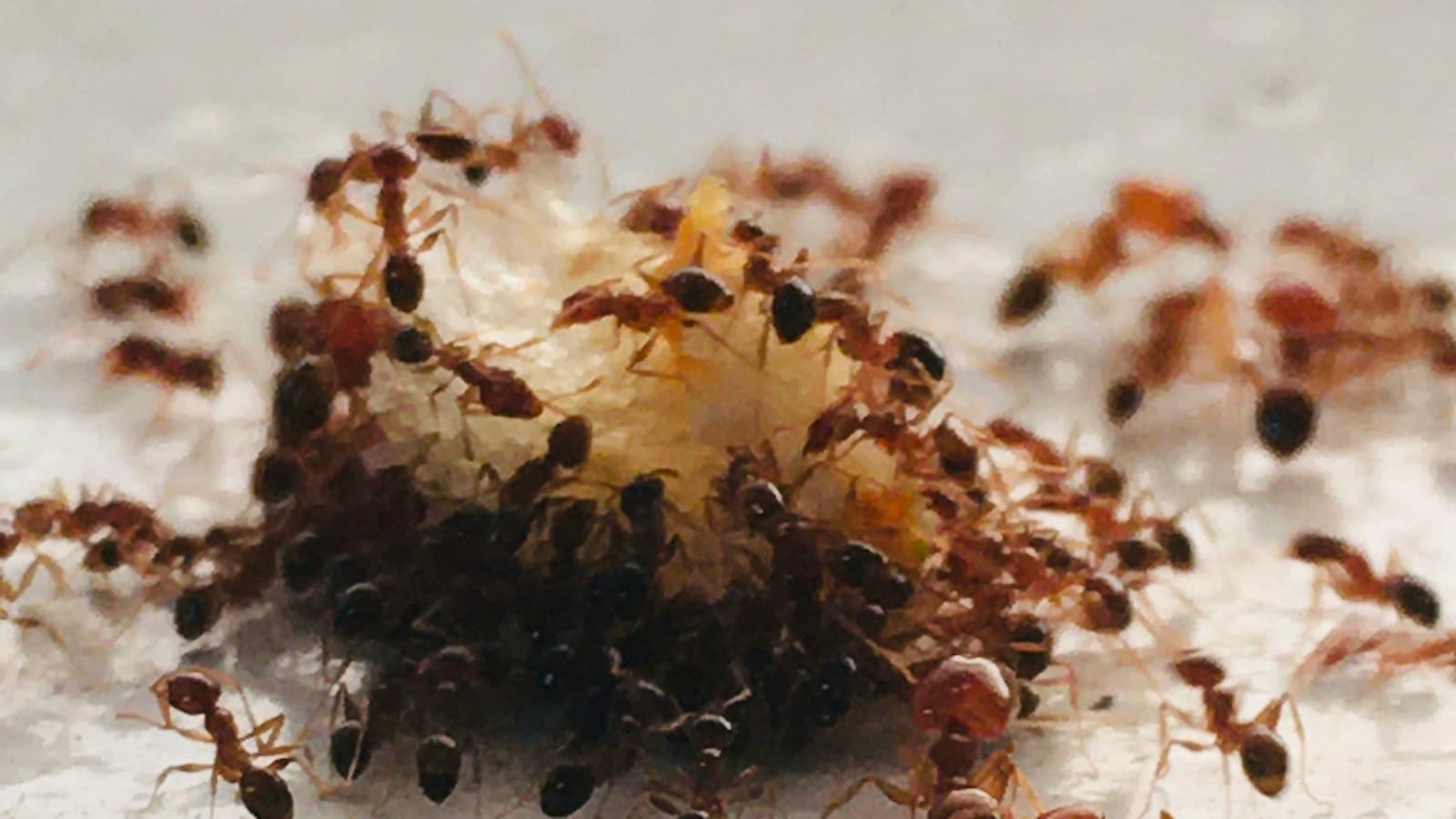
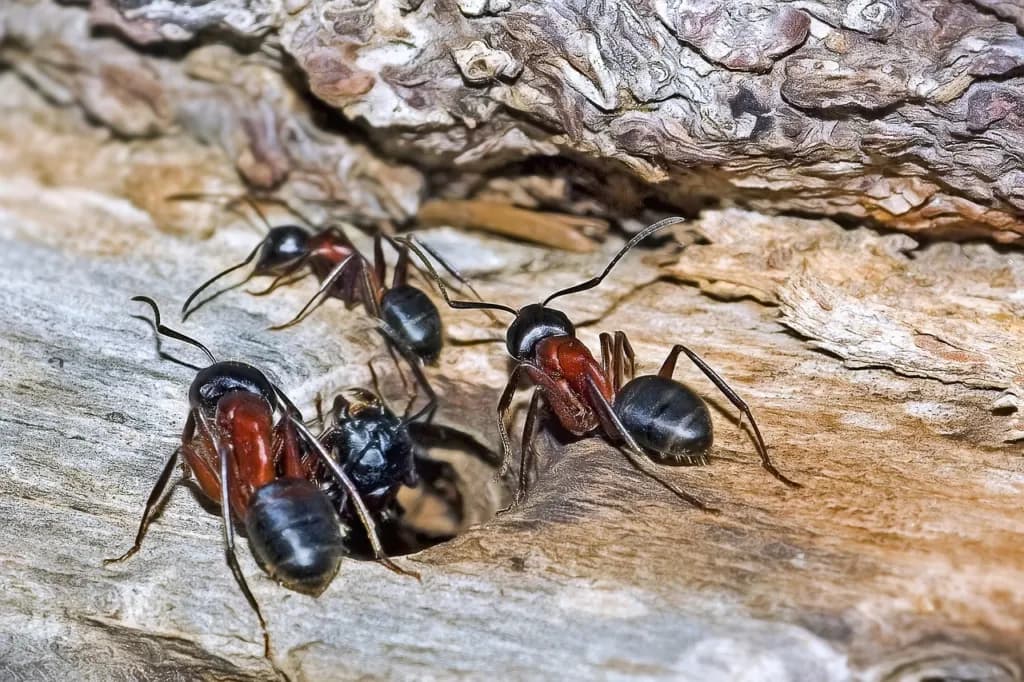
A line of ants crossing your kitchen did not happen by chance. It is the end result of a colony finding something worth having, deciding it is worth the effort, and sending workers to collect it. If you know how to read it, a trail tells you a lot about what you are up against.
Wipe it away too quickly, though, and you lose the best lead you will get back to the nest.
How Trails Form
A scout leaves the colony and wanders until it finds food or water. On the way home, it lays down a chemical scent trail.
Other workers follow that scent, find the same resource, and add their own scent on the return trip. The better the find, the more ants commit and the stronger the trail becomes. That is how one wandering ant turns into a steady line within a few hours.
Two things follow from this. A heavy trail means the colony values whatever it found. And because the trail is chemical rather than visual, ants will keep following the same path after you wipe up the visible ants, unless the scent itself is cleaned away.
What The Direction Tells You
Watch what the ants are carrying.
Ants heading *toward* the food are outbound foragers. Ants heading *away* with crumbs or droplets are returning home. Follow the loaded ones and they will lead you toward the nest, through a gap, down a wall, out under the stucco, and into the yard.
That ten minutes of watching is the most useful thing you can do with a trail. Most people skip it and reach for a spray, which erases the evidence.
What The Volume Tells You
How busy a trail is gives you a rough idea of the colony behind it.
- A few scattered ants - scouts exploring, no trail locked in yet. This is the easiest time to step in.
- A thin, steady line - the colony has committed, but it is still manageable.
- A thick, constant stream - a large colony with lots of workers and probably more than one route.
- Several trails from different directions - either one very large colony or, more often, multiple nests.
That last situation matters. Some ants common in southern Utah, including odorous house ants, spread across several connected nests that share workers. Treating just one of those nests does very little.
What The Route Tells You
Ants like edges. They travel along baseboards, countertop seams, window tracks, cables, and pipes because those give them something to follow and some cover.
That means the route traces how they are getting inside:
- A trail along a window track points to a gap in the frame or the stucco around it
- A trail coming out from under a baseboard suggests a path through the wall
- A trail following a pipe or line points to an unsealed utility opening
- A trail running up an outside wall points to eaves, tile roof edges, or vents
Every one of those openings can let in other pests too.
What The Timing Tells You
Notice when the trail is busiest. In the St. George heat, many ants shift their foraging to early morning, evening, and night, when surfaces are cooler. A trail that shows up suddenly after sprinklers run or after a monsoon storm often means a nest got flooded and is moving.
Ongoing activity in one room, especially a kitchen or bathroom, combined with any dampness is worth paying attention to. Some ants nest in wall voids where a slow leak has softened materials, which means there may be a plumbing problem behind the ant problem.
Why Spraying The Trail Backfires
This is the most common reaction, and one of the least effective.
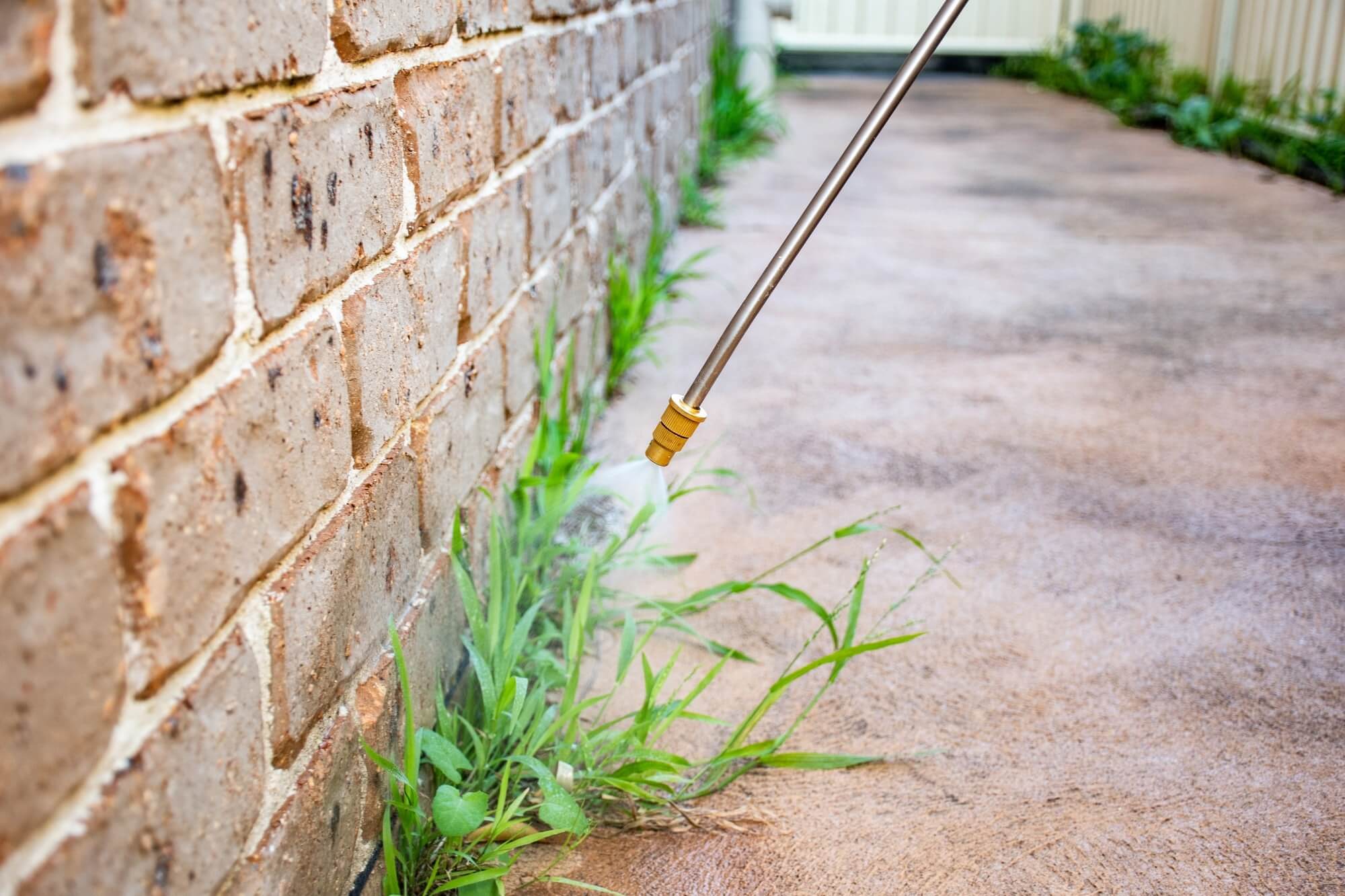
A contact spray kills the ants you can see. It does not touch the colony, which may contain thousands of workers and one or more queens. Worse, some species respond to the stress by budding, splitting off groups of workers and queens to start new nests somewhere else in or around the house.
The trail disappears and the spray seems to have worked. A couple of weeks later there are trails in two new places, and one colony has become several.
Baits work with ant behavior instead of against it. Workers carry the bait back and share it through the colony, including with the queens. It takes longer and it means leaving the trail alone so the ants can carry the bait home, which is exactly why the usual advice is not to spray.
What To Do Instead
- Leave the trail long enough to see where it goes
- Take a photo of the route and note where it enters
- Remove whatever food or water is attracting them
- Clean the surface with soapy water *after* you have traced the route, to break up the scent trail
- Get the species identified before treating, because the right approach varies a lot from one ant to another
If you have ant trails in your St. George area home, contact Butter Pest Control before you spray. We will identify the species, trace the colony, and treat it in a way that eliminates it instead of spreading it around.
Dealing with this pest at your place?
Butter serves St. George and southern Utah with free inspections and a re-treatment guarantee. Get an honest quote, no pressure.
Aspen Chournos
Aspen Chournos writes about desert pest pressure and prevention for homes and businesses across St. George and southern Utah.