Beetles are the largest group of insects on Earth, and the ones that end up inside a St. George home get there for very different reasons. Treating them all as one problem is the main reason beetle control so often fails.
There are three categories, and knowing which one you are dealing with shapes everything else.
Category One: Occasional Invaders
These beetles live outside and wander in by accident or seasonally. They do not eat or breed inside the house.
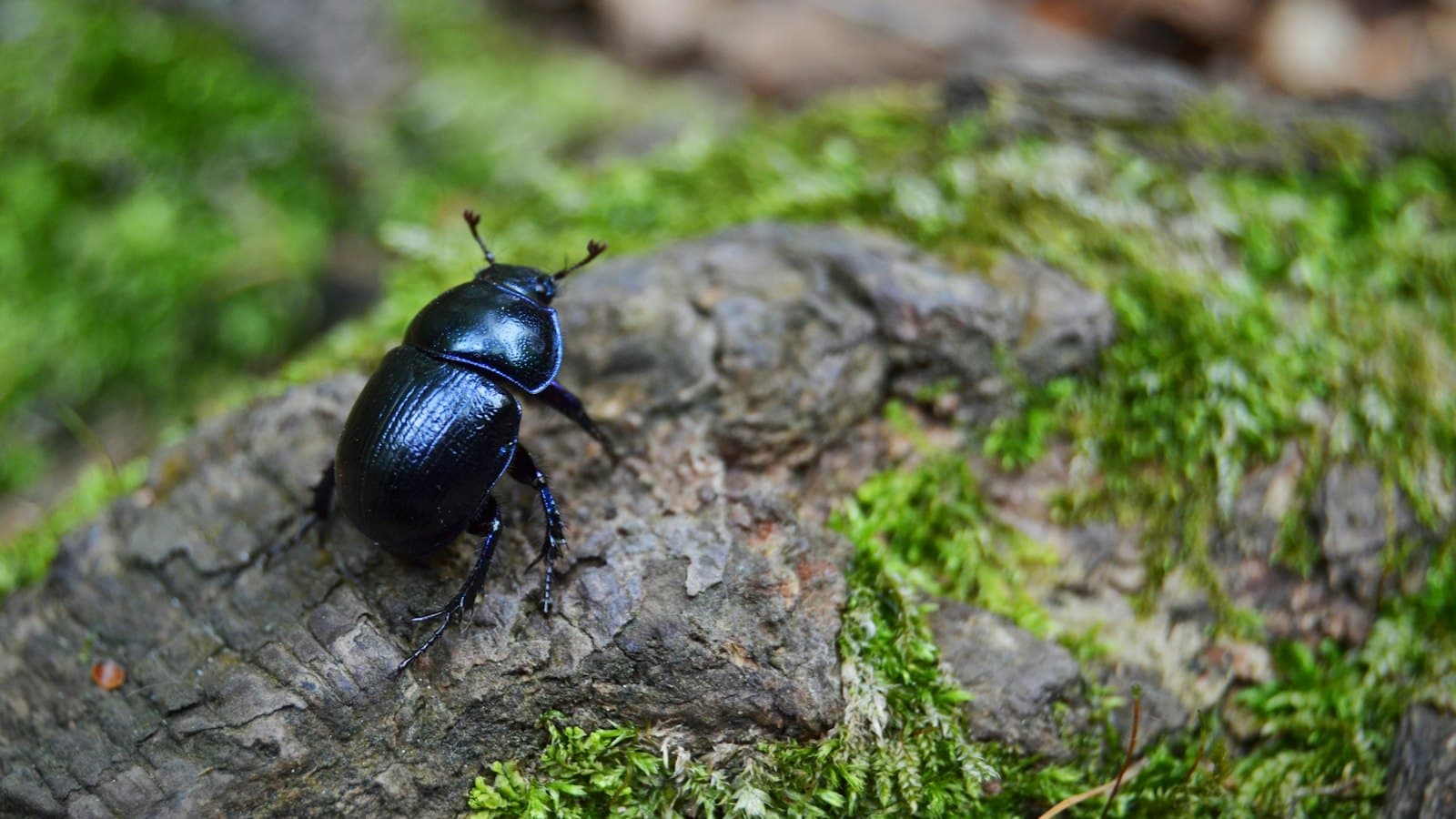
Around southern Utah, common examples include darkling beetles (often called stink beetles, the black beetles that tip their rear ends up when disturbed), ground beetles, and June beetles drawn to porch lights on summer nights.
They come in through gaps at ground level, under doors, and through unsealed openings, often following lights after dark. Once inside they wander around, die, and end up in the vacuum.
Solution: exclusion and lighting.
- Install and maintain door sweeps, especially on garage doors
- Seal stucco cracks, weep screed gaps, and utility openings
- Repair torn window and door screens
- Use fewer outdoor lights, or switch to warm-toned bulbs that draw fewer insects
- Move lights away from doors where you can
- Keep a clear, debris-free strip along the foundation
No indoor treatment is needed for this group. They are not living in the house.
Category Two: Stored Product Pests
These beetles breed in food and can keep an indoor population going indefinitely. This is the category people most often misread.
The usual suspects include sawtoothed grain beetles, red and confused flour beetles, drugstore and cigarette beetles, and merchant grain beetles. They are tiny, often less than an eighth of an inch, and reddish-brown to dark brown.
They infest flour, cereal, crackers, pasta, rice, spices, dried fruit, pet food, birdseed, and decorative items made with seeds or dried plants.
Most importantly, they usually come home already inside a package from the store. The infestation did not walk in from the yard.
Solution: find and remove the source.
- Check every dry good in the pantry, not just the obvious one. Look for live insects, tiny holes in packaging, webbing, or fine dust
- Throw out anything infested in a sealed bag, outside
- Check pet food, birdseed, and decorative items, which are often the real source and easy to overlook
- Vacuum shelves thoroughly, including cracks and corners
- Wipe down the shelves and let them dry completely
- Move what is left into sealed glass or hard plastic containers
- Freeze new bulk purchases for several days before putting them away
Spraying the pantry does not fix this. The beetles are inside the food.
Category Three: Fabric And Material Pests
Carpet beetles are the main concern here, and they cause damage that often gets blamed on moths.
The adults are small, round, and mottled in black, brown, and cream, and they often turn up on windowsills. The larvae do the damage. They are small, bristly, carrot-shaped, and usually hidden.
They feed on animal-based materials: wool, silk, leather, fur, feathers, pet hair, and dead insects. They gather in undisturbed spots, under furniture, along carpet edges, in closets, inside vents, and wherever lint and hair build up. In desert homes, the dead insects that pile up in light fixtures and window tracks are a common, overlooked food source.
Solution: thorough cleaning plus targeted treatment.
- Vacuum thoroughly and often, including under and behind furniture, along carpet edges, and in closets
- Clean or wash natural-fiber items before storing them
- Store wool and similar materials in sealed containers
- Check and clean vents and returns where lint collects
- Clear dead insects from light fixtures and window tracks
- Deal with any bird or rodent nests in the attic or eaves, since they directly support carpet beetles
What Applies Across All Three
Seal the house. Gaps let in occasional invaders and let outdoor populations restock indoor ones.
Control moisture. Even in the desert, leaks under sinks and damp storage areas support several beetle types and the mold some of them feed on.
Handle firewood carefully. Wood-boring beetles can emerge from firewood stored indoors. Keep it outside, off the ground, away from the house, and bring in only what you will burn that day.
Cut the clutter. Undisturbed piles are where pantry and fabric pests build up unnoticed.
Inspect on a schedule. Checking pantry goods, closets, and storage areas a few times a year catches problems while they are small.
When To Get Help
Call if beetles keep coming back after you have removed the obvious source, if you see damage in fabrics or stored goods, if you cannot tell what you are finding, or if the problem is spreading from room to room.
Ongoing beetle activity almost always means the real source has not been found. That is where a professional inspection really helps.
If beetles keep turning up in your St. George home, contact Butter Pest Control. We will identify the species, find where they are coming from, and deal with it directly.
Dealing with this pest at your place?
Butter serves St. George and southern Utah with free inspections and a re-treatment guarantee. Get an honest quote, no pressure.
Aspen Chournos
Aspen Chournos writes about desert pest pressure and prevention for homes and businesses across St. George and southern Utah.